Edward Jenner Quotes
The deviation of man from the state in which he was originally placed by nature seems to have proved to him a prolific source of diseases.
Jenner, Edward. An Inquiry into the Causes and Effects of the Variolæ Vaccinæ. Sampson Low, 1798, p. 1.


This quotation illustrates one of the contemporary problems that Muslims face. The problem of overeating and especially obesity are now known to be serious health problems. The Prophet had called attention to this while the majority of the world, afraid of starvation, considered obesity and overeating as a sign of affluence and health. In that sense the Prophet provided sound medical advice. However, for those Muslims who take the words of the Prophet literally, they take the statement literally and therefore pay little or no attention to immunization, water pollution, sanitation other than specified by the Prophet. To them, there are no other causes of disease because Muhammed said so. The wisdom from Aristotle to Einstein typically moved knowledge and mankind ahead with new and critical insights and revelations but all were wrong in some respects and future science has determined that. But for the fundamentalist Muslim, there can be no error in the word of the Prophet, just as for the fundamentalist Christian or Jew, there can be no error in their Bibles. Although valid for Muslims, the Hadith is less well known than the Koran which is recited by all good Muslims.


Lieber in 1860 was assigned by President Lincoln to study the then international laws of war and prepare a manual for the guidance of union troops in the Civil War. Lincoln then issued the document as a general order, and much of today’s military rules of conduct came from that effort.


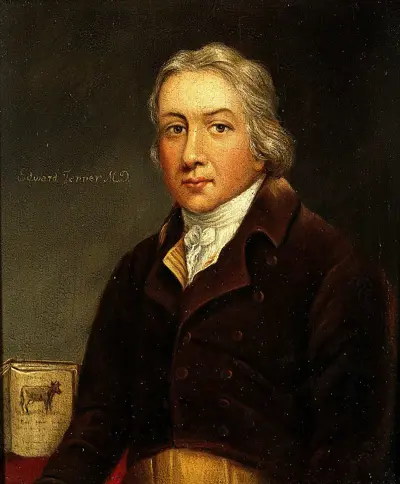
Edward Jenner, FRS FRCPE was an English physician and scientist who pioneered the concept of vaccines including creating the smallpox vaccine, the world's first vaccine. The terms vaccine and vaccination are derived from Variolae vaccinae (smallpox of the cow), the term devised by Jenner to denote cowpox. He used it in 1798 in the long title of his Inquiry into the Variolae vaccinae known as the Cow Pox, in which he described the protective effect of cowpox against smallpox.
