Emile Zola Quotes
The day is not far off when one ordinary carrot may be pregnant with revolution.
Zola, Émile. Mon Salon. Librairie Centrale, 1866.


Lev Davidovich Bronstein

The veiled threat of violence and disruption was a tactic that did not work.


This is not only attributed by reliable sources but apparently Roosevelt had said this on several occasions. The word “radical” has had different shades of meaning at different periods of American History. The origin of the word from the Latin means someone who wishes to change things very rapidly and not gradually. In the time of the Civil War, the majority of the Republicans proudly referred to themselves as “radicals” or “radical Republicans” because they wanted to abolish slavery immediately. In the late 19th century the word “radical” referred to anarchists. From the Russian Revolution onward “radicals” were communists who presumably wanted to change governments throughout the work through revolution—very rapid change. However, in the early 20th century, radicals were people who wanted to reform and regulate businesses and monopolies rapidly and it is this sense he was a radical. But by style, he was a radical in most things in that he wanted to change things and change them rapidly.


This was King’s first appearance on the nation’s most prestigious news show.
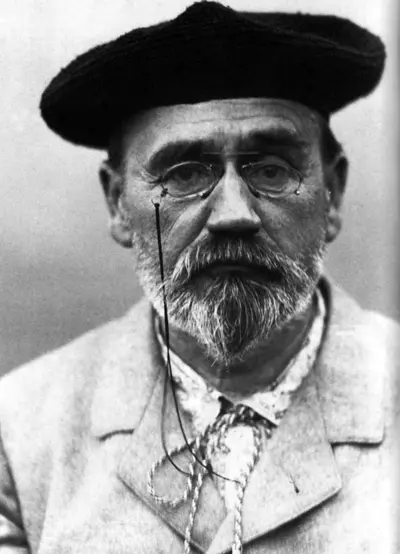
Émile Édouard Charles Antoine Zola was a French novelist, journalist, playwright, the best-known practitioner of the literary school of naturalism, and an important contributor to the development of theatrical naturalism. According to major Zola scholar and biographer Henri Mitterand, "Naturalism contributes something more than realism: the attention brought to bear on the most lush and opulent aspects of people and the natural world. The realist writer reproduces the object's image impersonally, while the naturalist writer is an artist of temperament." He was a major figure in the political liberalization of France and in the exoneration of the falsely accused and convicted army officer Alfred Dreyfus, which is encapsulated in the renowned newspaper headline J'Accuse…! Zola was nominated for the first and second Nobel Prize in Literature in 1901 and 1902.
