John Paul Stevens Quotes
The current dominant opinion supporting the war on drugs in general, and our anti-marijuana laws in particular, is reminiscent of the opinion that supported the nationwide ban on alcohol consumption when I was a student. While alcoholic beverages are now regarded as ordinary articles of commerce, their use was then condemned with the same moral fervor that now supports the war on drugs.
John Paul Stevens, U. S. Supreme Court Justice, Quoted in The Progressive, August 2007
Sourced by: Eigen's Political and Historical Quotations


This was a great surprise to most conservatives who assumed that Robertson, a major conservative leader and ordained minister would be opposed to drug legalization.

He was also a paid lobbyist for the beer industry.


Friedman was an advocate for the legalization of illicit drugs, claiming that the harm that is done by making drugs illegal is greater than that which would occur if drugs were legalized. He also observed that alcohol kills times the number of Americans than does illegal drugs and tobacco kills four times as many as alcohol.

That was certainly true at that time in the United States. Marijuana was illegal, but alcohol and nicotine—cigarettes—were legal. Yet, over 350,000 deaths a year were caused by nicotine, over 100,000 alcohol related death the epidemiologists had found. But the number of marijuana caused death was just a handful, although there were hunreds of deaths of drug dealers fighting for territory, Nicotine an alcohol science had proved was addicting. Not so for marijuana which for some people was habituating, but marijuana never met the scientific criteria for addiction.


President Barack Obama had the week before, made a speech observing the fact that marijuana was less dangerous then alcohol.
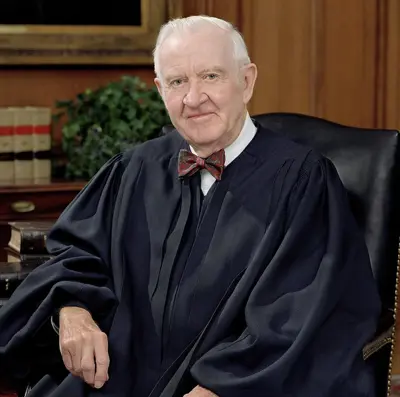
John Paul Stevens was an American lawyer and jurist who served as an associate justice of the United States Supreme Court from 1975 until his voluntary retirement in 2010. At the time of his retirement, he was the second-oldest-serving justice in the history of the court and the third-longest-serving justice. At the time of his death, he was the longest lived Supreme Court justice ever. His long tenure saw him write for the court on most issues of American law, including civil liberties, death penalty, government action and intellectual property. In cases involving presidents of the United States, he wrote for the court that they were to be held accountable under American law. A registered Republican when appointed who throughout his life identified as a conservative, Stevens was considered to have been on the liberal side of the court at the time of his retirement.
