William Ellery Channing Quotes
The cry has been that when war is declared, all opposition should therefore be hushed. A sentiment more unworthy of a free country could hardly be propagated. If the doctrine be admitted, rulers have only to declare war and they are screened at once from scrutiny. . . . In war, then, as in peace, assert the freedom of speech and of the press. Cling to this as the bulwark of all our rights and privileges.
Channing, William Ellery. "Duties of the Citizen in Times of Trial or Danger." The Works of William E. Channing, D.D., vol. 5, James Munroe and Company, 1841, p. 154.


Two decades later Jefferson, after his Presidency, had developed a different attitude towards the press. See {585116}.

In September of 2005 a Danish Newspaper published some political cartoons showing the hypocrisy of some Muslims who use Islam to justify murder of innocents and terrorism. Months later, many in the Middle East protested vehemently and Muslim riots broke out and Danish boycotts ensued because the Prophet Muhammad's visage was depicted against Islamic tradition. Many Muslim leaders claimed that insulting religion was an “abuse” of freedom of speech including those from nations which regularly publish material that is virulent against Christians and Jews.


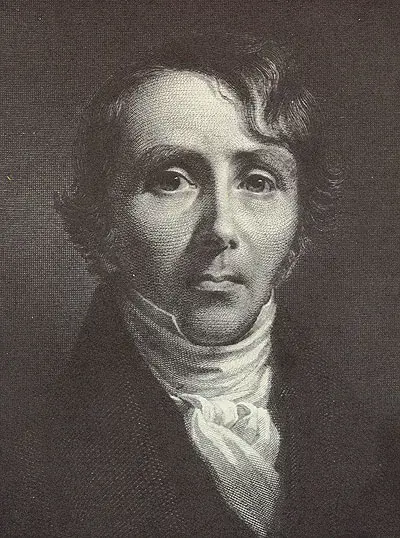
William Ellery Channing was the foremost Unitarian preacher in the United States in the early nineteenth century and, along with Andrews Norton (1786–1853), one of Unitarianism's leading theologians. Channing was known for his articulate and impassioned sermons and public speeches, and as a prominent thinker in the liberal theology of the day. His religion and thought were among the chief influences on the New England Transcendentalists although he never countenanced their views, which he saw as extreme. He espoused, especially in his "Baltimore Sermon" of May 5, 1819, given at the ordination of the theologian and educator Jared Sparks (1789–1866) as the first minister of the newly organized First Independent Church of Baltimore, the principles and tenets of the developing philosophy and theology of Unitarianism, leading to the organization in 1825 of the first Unitarian denomination in America (American Unitarian Association) and the later developments and mergers between Unitarians and Universalists, resulting finally in the Unitarian Universalist Association of America in 1961.
