Albert Einstein Quotes
The creation of a United States of Europe is a necessity if one considers the economic and technical situation.
This was an incredibly prescient and visionary statement regarding the EEC. It would be years after his death that his vision was finally turned into reality.
Albert Einstein, 1879-1955, Nobel laureate in Physics, Interview with Milton James, October 7, 1948
Sourced by: Eigen's Political and Historical Quotations

This is an example of some of the early views about the federation of Europe.

The proposal had many of the characteristics of the EEC adopted years later.

His predictions occurred much earlier than even he had thought that they would.
This is one of the earliest conceptions of a European Community. It is not known whether he was referring to Europe including England or continental Europe only without England.


Stieglitz was a critic of the Euro and the general notion of countries federating politically trying to have a common currency, He argued that the individual nations lose some of the major tools they have to affect the economy if things are not good economically.


Little heed was paid either to the principle of disarmament or to a United Europe. It took two World Wars and a Cold War to create a United Europe.


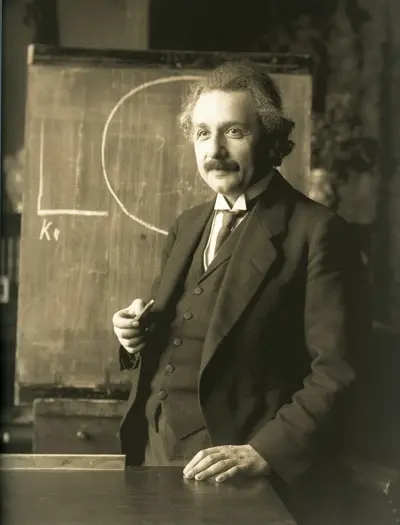
Albert Einstein was a German-born theoretical physicist, widely acknowledged to be one of the greatest physicists of all time. Einstein is known for developing the theory of relativity, but he also made important contributions to the development of the theory of quantum mechanics. Relativity and quantum mechanics are together the two pillars of modern physics. His mass–energy equivalence formula E = mc2, which arises from relativity theory, has been dubbed "the world's most famous equation". His work is also known for its influence on the philosophy of science. He received the 1921 Nobel Prize in Physics "for his services to theoretical physics, and especially for his discovery of the law of the photoelectric effect", a pivotal step in the development of quantum theory. His intellectual achievements and originality resulted in "Einstein" becoming synonymous with "genius".
