Warder Clyde Allee Quotes
... the cooperative forces are biologically the more important and vital. The balance between the cooperative and altruistic tendencies and those which are disoperative and egoistic is relatively close. Under many conditions the cooperative forces lose, In the long run, however, the group centered, more altruistic drives are slightly stronger. ... human altruistic drives are as firmly based on an animal ancestry as is man himself. Our tendencies toward goodness... are as innate as our tendencies toward intelligence; we could do well with more of both.
Allee, Warder Clyde. "Where Angels Fear to Tread: A Contribution from General Sociology to Human Ethics." Science, vol. 97, no. 2528, 11 June 1943, p. 521.


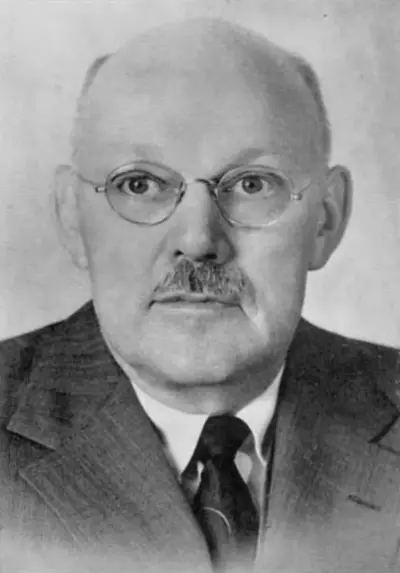
Warder Clyde Allee was an American ecologist. He is recognized to be one of the great pioneers of American ecology. As an accomplished zoologist and ecologist, Allee was best known and recognized for his research on social behavior, aggregations and distributions of animals in aquatic as well as terrestrial environments. Allee attended Earlham College and upon his graduation in 1908, pursued advanced studies at the University of Chicago where he received his PhD and graduated summa cum laude in 1912. Allee's most significant research occurred during his time at the University of Chicago and at the Marine Biological Laboratory at Woods Hole in Massachusetts. His research findings led to many publications, with the most notable being Principles of Animal Ecology and Animal Aggregations. Allee was married to author Marjorie Hill Allee and remained active in the field of biology until his death in 1955 at the age of 70.
