Clarence Thomas Quotes
The Constitution, in addition to delegating certain enumerated powers to Congress, places whole areas outside the reach of Congress' regulatory authority. The First Amendment, for example, is fittingly celebrated for preventing Congress from "prohibiting the free exercise" of religion or "abridging the freedom of speech." The Second Amendment similarly appears to contain an express limitation on the government's authority.
Thomas, Clarence. Concurring opinion. Printz v. United States, 521 U.S. 898, Supreme Court of the United States, 1997.


The Fort Collins newspaper had published the names of concealed gun permit holders. Clauber and others felt that this inhibited people who were breaking no laws and just wanted to avail themselves of their 2nd Amendment rights. The Newspaper argued that there was a public safety issue at stake in that people should be aware of which people they may be dealing with in day to day affairs are armed and this they can alter their behavior as not to provoke or deal with these people.

Many New Yorkers and others felt that since the attack on the World Trade Center was made in the name of Islam, the mosque and commuity center should be built in another location further from Ground Zero. Ellison was debating someone who argued that the Mosque should not be built so that sensitivity can be shown for those New Yorkers who lost relatives and friends in the attack of September 11. Rather than insist on their Constitutional rights, the Muslim leadership of the project, moved the location somewhat further away from Ground Zero.


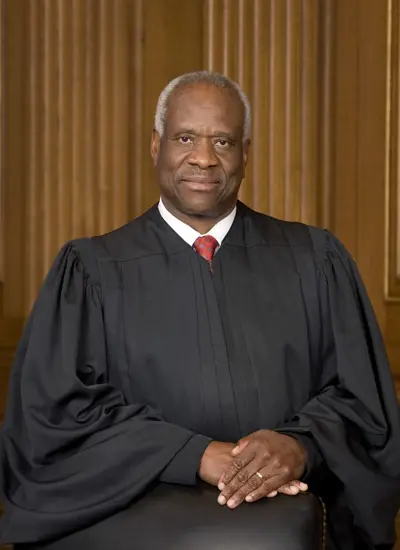
Clarence Thomas is an associate justice of the Supreme Court of the United States. He was nominated by President George H. W. Bush and confirmed by the United States Senate to succeed Thurgood Marshall, and is the second African American to serve on the Court. Since 2018, Thomas has served as the senior associate justice, the longest-serving member of the Court, with a tenure of 29 years, 178 days as of April 19, 2021.
