Joseph Conrad Quotes
The condemned social order has not been built up on paper and ink, and I don't fancy that a combination of paper and ink will ever put an end to it.
Conrad, Joseph. A Personal Record. Harper & Brothers, 1912.


And as the leader of the exploited, after his revolution he became a dictator himself, albeit a very popular one amongst most Cubans.

In 1927 there was a Peasant Uprising in the Hunan Province of China. Young Mau went there and wrote a report. Corruption has plagued China for millennia. As can be seen by this quotation, Mao thought that a “people’s revolution” would end corruption and despite capital punishment for corruption under the Communist government, corruption still thrived. By the 21st century corruption was common among local Communist Party Officials despite national party and government attempts to obliterate it.


Later, when President McKinley was assassinated, many blamed Hearst for inflaming passions and sanctioning political assassination.

This is a very important historical, political quotation. The conservatives have since the Russian Revolution conflated socialism and communism. However, here in 1932 the leader of the American Socialist Party had already described the Communist Revolution in Russia as a failure of founding an acceptable modern state. Nonetheless, even into the 21st century many conservatives describe Thomas as a Communist. See {626692} for his distinction between Communism and Socialism. The difficulty of modern nation building was explained by Thomas and others but was really not accepted until the many attempts of the early 21st century, some supported by America like Iraq and Afghanistan and the Balkans and others like the “Arab Spring.” Then his early wisdom on this point became more appreciated.


Saloth Sar Pol Pot. His view was that any small merchant or tradesman running a business was a capitalist, and all educated were enemies of the people. He moved entire populations out of the cities into the countryside where they would live as peasants or be murdered as about 20% of the entire population as. Therefore, in his warped view, the capitalists could no longer “control” Cambodia.

While this is very true in the long term, the Church in the short term has almost always supported actively or by its neutrality, the ruling class as opposed to those who would make revolutionary change even to the extent of participating in the torture, murder, and intimidation of most of the Catholics in the society. The ruling class, in turn, supported the Church and used the power of the state to enforce religious doctrine and prevent alternative religious views and practices to prevail even if only with small minorities. See {632407} for another Mises quotation articulating examples of this.


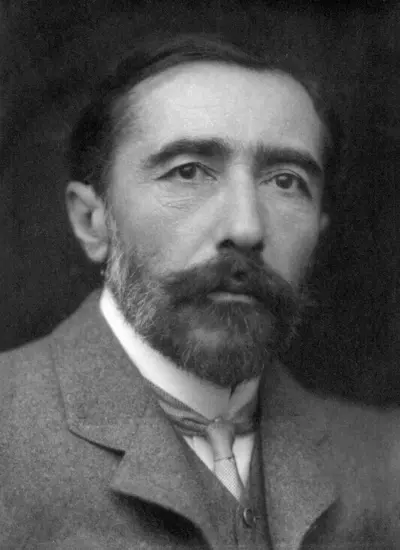
Joseph Conrad was a Polish-British writer regarded as one of the greatest novelists to write in the English language. Though he did not speak English fluently until his twenties, he became a master prose stylist who brought a non-English sensibility into English literature. Conrad wrote stories and novels, many with a nautical setting, that depict trials of the human spirit in the midst of what he saw as an impassive, inscrutable universe.
