Walter Reuther Quotes
The coalition of conscience
Walter Reuther, 1907-1970, President, United Auto Workers Name he gave to the coalition of Unions, Churches, and activist organization who were lobbying heavily for President Johnson’s Civil Rights Act, 1964
Sourced by: Eigen's Political and Historical Quotations


While the American people at that time generally were familiar with homosexual issues, few know much about transgender people who were generally quite discreet and had not been militant. They were politically and media wise, almost invisible. Hence the statement was very meaningful and appreciated coming from a high government official. North Carolina passed a state law making it illegal for any person to use a public bathroom reserved for a gender different from what appeared on their birth certificate, regardless of what the city, county or local community had been doing or wanted to do. Transgender men who dressed, looked, acted, and lived as men, under the law would have to use the women's toilet, which could in many situations would cause them to be attacked by others perceiving that man was attempting to use the women's rest rooms.


_0_thumbnail_47x47.jpg)


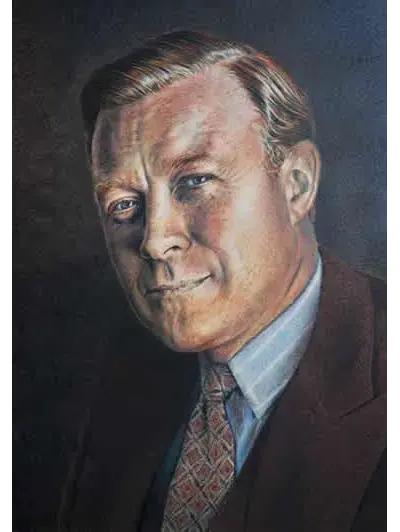
Walter Philip Reuther was an American leader of organized labor and civil rights activist who built the United Automobile Workers (UAW) into one of the most progressive labor unions in American history. He saw labor movements not as narrow special interest groups but as instruments to advance social justice and human rights in democratic societies. He leveraged the UAW's resources and influence to advocate for workers' rights, civil rights, women's rights, universal health care, public education, affordable housing, environmental stewardship and nuclear nonproliferation around the world. He believed in Swedish-style social democracy and societal change through nonviolent civil disobedience. He survived two attempted assassinations, including one at home where he was struck by a 12-gauge shotgun blast fired through his kitchen window. He was the fourth and longest serving president of the UAW, serving from 1946 until his untimely death in 1970.
