Karl Marx Quotes
The bureaucracy is a circle from which one cannot escape. Its hierarchy is a hierarchy of knowledge. The top entrusts the understanding of detail to the lower levels, whilst the lower levels credit the top with understanding of the general, and so all are mutually deceived.
Marx, Karl. Critique of Hegel's 'Philosophy of Right'. Translated by Annette Jolin and Joseph O'Malley, Cambridge University Press, 1970, p. 47.


Political ideologues like Abrams distrust and disrespect civil service officials. Abrams and his colleagues are most critical of the civil service’s alleged lack of loyalty to the President. However, he forgets and most people never realize that all Civil Servants when they take their oath of office pledge their loyalty to the Constitution and not to the President. Many of them criticize presidential, political party and ideological loyalists like Abrams because even Abrams and other Presidential appointments swear an oath to the Constitution and not the President or a political party.

There was huge pressure on the central government to decentralize as they held all the power in Indonesian society. However, if they devolved power to the Provinces (States), many of them could be large enough and independent enough to secede and become an independent country as East Timor had done. So the Indonesian power structure bypassed the Provincial governments and devolved power directly to the local governments, none of which was independent enough to go it alone. The desired objective was met—no more secessions. However, there was no one to worry about regional and national issues and problems as the politicians who had power were all local. The country was becoming non-functional in many ways.


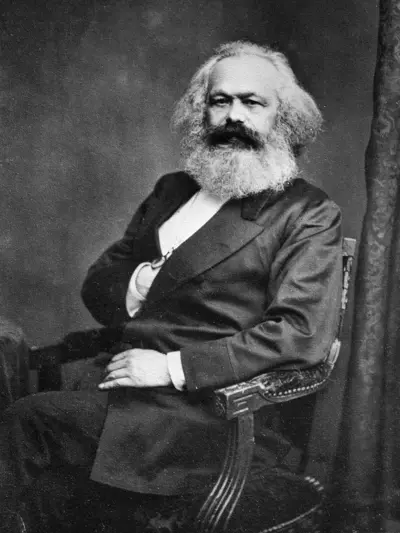
Karl Heinrich Marx was a German philosopher, economist, historian, sociologist, political theorist, journalist and socialist revolutionary. Born in Trier, Germany, Marx studied law and philosophy at university. He married Jenny von Westphalen in 1843. Due to his political publications, Marx became stateless and lived in exile with his wife and children in London for decades, where he continued to develop his thought in collaboration with German thinker Friedrich Engels and publish his writings, researching in the reading room of the British Museum. His best-known titles are the 1848 pamphlet The Communist Manifesto and the three-volume Das Kapital (1867–1883). Marx's political and philosophical thought had enormous influence on subsequent intellectual, economic and political history. His name has been used as an adjective, a noun, and a school of social theory.
