Paul Goodman Quotes
The "brightness" of the 15 percent might or might not indicate a profound feeling for the causes of things; it is largely verbal and symbol-manipulating, and is almost certainly partly an obsessional device not to know and touch risky matter, just as Freud long ago pointed out that the nagging questions of small children are a substitute for asking the forbidden questions.
Goodman, Paul. Growing Up Absurd: Problems of Youth in the Organized System. Random House, 1960.

By symbols be was not only referring to metaphorical symbols of letters, words, digrams, numbers and formulas. The vast majority of all human knowledge is spread by symbols of one kind or another. The must sophisticated devices or weapons all boil down to sets of words, formulas and diagrams. Art is almost all symbolic.


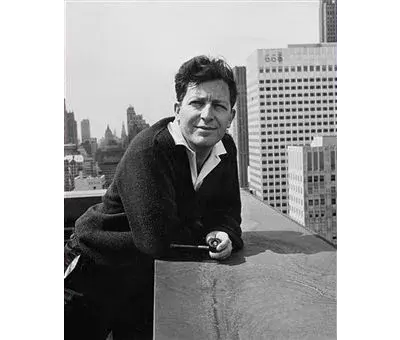
Paul Goodman (1911–1972) was an American author and public intellectual best known for his 1960s works of social criticism. Born to a Jewish family in New York City, Goodman was raised by his aunts and sister and attended City College of New York. As an aspiring writer, he wrote and published poems and fiction before attending graduate school in Chicago. He returned to writing in New York City and took sporadic magazine writing and teaching jobs, many of which he lost for his outward bisexuality and World War II draft resistance. Goodman discovered anarchism and wrote for libertarian journals. He became one of the founders of gestalt therapy and took patients through the 1950s while continuing to write prolifically. His 1960 book of social criticism, Growing Up Absurd, established his importance as a mainstream cultural theorist. Goodman became known as "the philosopher of the New Left" and his anarchistic disposition was influential in 1960s counterculture and the free school movement. His celebrity did not endure far beyond his life, but Goodman is remembered for his principles, outré proposals, and vision of human potential.
