Andrew Jackson Quotes
The brave man inattentive to his duty, is worth little more to his country than the coward who deserts in the hour of danger.
Jackson, Andrew. "Address to the Mutinous Troops." 1813. Life of Andrew Jackson, by James Parton, vol. 1, Mason Brothers, 1860, p. 462.


Adams, after his presidency, served in the House of Representatives for many years. He collapsed at his desk in the House and died in the Speaker’s office.


Public opinion in the Union was quite different and more complex. Eggleston was an accomplished writer who had served in the Confederate army of the Civil War. 20 year after the war he wrote a series of articles for the prestigious Northern Atlantic Monthly trying to convey the war from the Southerner’s point of view.


After the Civil War, the General, who had little money, was offered a huge sum to write his memoirs for publication. He refused.


Lord Murray had decided to support Prince Charles in his attempt to seize the Scottish Crown. His statement is one of the great examples of self-interest yielding to principles. Note that the capitalization of “King” and “Country” are the Lord’s and reflects the majesty that these words then reflected.


Bassi was one of the unique military chaplains in history. Instead of just ministering to the men spiritually, he marched at the head of the Italian revolutionary Army and was wounded in combat. Although he never carried arms, he was executed along with those who did.
Colonel Banks had given him the Regimental colors flag and urged him to take care to return it with honor. This was his famous reply. In the midst of the Battle he was hit fatally with a cannonball. A Black corporal then took up the colors and he too was killed and yet another Negro corporal took the flag and returned it after a battle where the Blacks were commended for their valor. This quotation has been quoted to military men and women throughout the world as an outstanding example of military bravery and honor..


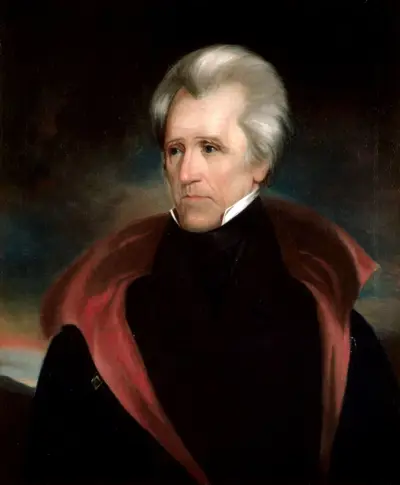
Andrew Jackson was an American lawyer, soldier, and statesman who served as the seventh president of the United States from 1829 to 1837. Before being elected to the presidency, Jackson gained fame as a general in the United States Army and served in both houses of the U.S. Congress. An expansionist president, Jackson sought to advance the rights of the "common man" against a "corrupt aristocracy" and to preserve the Union.
