Scott Adams Quotes
The best way to compile inaccurate information that no one wants is to make it up.
Adams, Scott. The Dilbert Principle: A Cubicle's-Eye View of Bosses, Meetings, Management Fads & Other Workplace Afflictions. HarperBusiness, 1996.

See {115604} for a similar sentiment from England.


McClellan after he left his White House Post, reflected on the experience, and wrote a book that described the George W. Bush White House practices many of which he was involved with.


This sentiment was apparently first expressed by the English Calvinist Minister, Charles Spurgeon, 1834-1892.


Alsop, a political hawk was convinced, as many other right wingers were at the time that the Russians had forged ahead of us in offensive missiles. When he asked President Eisenhower, the President never denied it, but never went to Congress to ask for more money to close the “missile gap”. Alsop made this shocking accusation which offended many Americans, but pleased the ultra-hawks and anti-communists. Most of the nation however then believed that there was a missile gap, with varying explanations of Eisenhower’s silence on the matter. Two years later John F. Kennedy, used the “missile gap” when running in 1960 against Nixon by attacking Nixon and Eisenhower for allowing us to fall behind the Russians at have a missile gap. When Kennedy became President, he was very surprised that there was no missile gap favoring the Russians—it was favoring the United States. Eisenhower did not want the Russians to know that he knew exactly what they were producing and deploying in missiles through great espionage sources. By not saying anything in the face of the accusations, the Russians assumed that the Americans really thought that they had more capacity than they did. And Eisenhower wanted that so that they would be secure that the United States had no real knowledge of their missile capacity. If Eisenhower had actually told the nation that the Russians were really behind us, the Russians would suspect a security leak and our sources could be compromised.
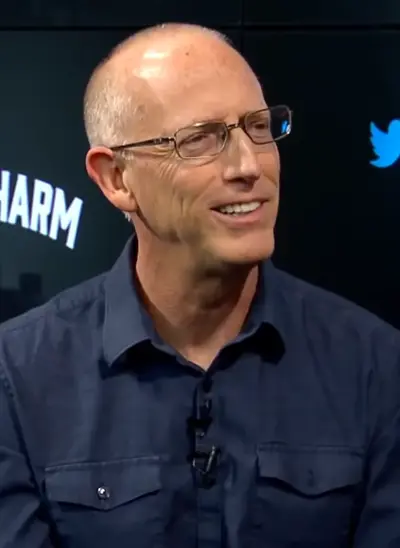
Scott Raymond Adams is an American artist and creator of the Dilbert comic strip and the author of several nonfiction works of satire, commentary, and business. His Dilbert series came to national prominence through the downsizing period in 1990s America and was then distributed worldwide. Adams worked in various roles at big businesses before he became a full-time cartoonist in 1995. He writes in a satirical, often sarcastic way about the social and psychological landscape of white-collar workers in modern business corporations.
