Walter Cronkite Quotes
The battle for the airwaves cannot be limited to only those who have the bank accounts to pay for the battle and win it.
Cronkite, Walter. Statement for the Alliance for Better Campaigns. 1998.


This quotation from the Koran is used by some to show that Islam was ahead of the West in terms of allowing women to earn their own money and inherit property. In this sense Islam was in the 7th Century far ahead of their Christian and Jewish Counterparts.
However, with this initial start, there is no version of Sharia (Islamic Law) that provides for men and women to earn equally for equal work. Further, there is no right to work at all. In Saudi Arabia, until 2005 women shopping for their own underwear had to buy from men as women were not allowed to be retail clerks. And the Taliban in Afghanistan required women to remain in their home and not work any other place. Even female doctors and nurses were not allowed to work in hospitals. Although they were allowed to control whatever meager income they might earn in their homes.

The Green Party and The Socialist Party had combined in an alliance. This was their publication. In addition to showing that the right to know and freedom of information was a major issue in other industrial democracies as well as the United States, the quotation is particularly interesting because the title of the article was used over 200 years before by none other than the American patriot, Patrick Henry. See {60328}. The phrase has been used many times in many lands since.

Computer utilization and ownership gap between segments of America


Mounting the scaffold referred to the scaffold for execution via the guillotine. If women could be executed she argued, women should be able to engage in public politics. Many women were executed in the frenzy and terror of the French Revolution. Ironically, the year after she wrote this, she herself mounted the scaffold and was beheaded by the state.


This is an incredible quotation by the American political standards of the 21st century. Coolidge was President and the conservative wing of the Republican Party controlled Congress. There were thousands of radio stations operating. The small commercial and amateur, and community radio stations were thriving but they could only afford small transmitters that only reached the local area. The large commercial radio stations wanted by be able to broadcast to the entire country (see {641989})and could afford huge transmitters but if a local station was on the same frequency the small station would dominate in the local area and not the large stations. The large corporations then lobbied the Federal Radio Commission and the Congress and this policy was adopted. Thousands of small radio stations were kicked off the airwaves so that the large corporate stations could have “clear channels” across the country. It turned out that the small entities did not have equal rights and it was a blatant Federal handover to the large corporations. (See {641992}).)Small stations were only able to broadcast with the advent of FM which only became economically feasible in the late 1940s although FM was patented in 1933.


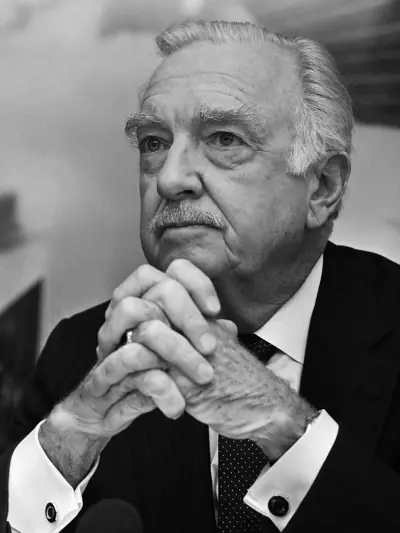
Walter Leland Cronkite Jr. was an American broadcast journalist who served as anchorman for the CBS Evening News for 19 years (1962–1981). During the 1960s and 1970s, he was often cited as "the most trusted man in America" after being so named in an opinion poll. Cronkite reported many events from 1937 to 1981, including bombings in World War II; the Nuremberg trials; combat in the Vietnam War; the Dawson's Field hijackings; Watergate; the Iran Hostage Crisis; and the assassinations of President John F. Kennedy, civil rights pioneer Martin Luther King Jr., and Beatles musician John Lennon. He was also known for his extensive coverage of the U.S. space program, from Project Mercury to the Moon landings to the Space Shuttle. He was the only non-NASA recipient of an Ambassador of Exploration award. Cronkite is known for his departing catchphrase, "And that's the way it is", followed by the date of the broadcast.
