Sean Wilentz Quotes
The Alien and Sedition Acts of 1798 went after unnaturalized immigrants as well as opposition newspaper editors.
President John Adams, once he became President, was greatly disturbed by the insults and attacks on him and his Federalist Party by many newspapers who preferred Thomas Jefferson and his view of democracy and freedom. Many of his supporters were also concerned about the new different immigrants that were coming to America in large numbers—–namely Roman Catholics. Adams and his Federalists passed the Alien and Sedition Acts which not only worked against new immigrants but was the first major attempt at government censorship of the press in American History. Ironically, these laws—–a blight on American democratic history—–were finally repealed in large part due to the effort of Adams son, John Quincy Adams, who served int the House of Representatives after his presidency and had always been an inveterate foe of the laws that his father had instituted.
"Campaign Stops: Will the G.O.P. Implode?", The New York Times, May 22, 2016
Sourced by: Eigen's Political and Historical Quotations


Actually it was Thomas Jefferson who had drafted most of the language. This attack was aimed at President John Adams, the big supporter of the unpopular Alien and Sedition laws, and the man Jefferson was intent on unseating at the end of his first term. He did and destroyed the Federalist Party in the process.


A famous Swiss Islamic scholar, Tariq Ramadan, was hired by the University of Notre Dame in the United States to be a professor. When he arrived at the airport to go to his new position, he was refused entry into the Untied States and sent back to Switzerland.
The Federalist Party had controlled the Executive and Congress for the first 3 Presidential terms (2 for Washington and 1 for John Adams) but Thomas Jefferson and his Democratic Republicans were threatening to unseat the Federalists. Even with the Sedition Act, the Jeffersonians won and the Federalist Party was destroyed forever. Ironically, Jefferson and subsequent administrations saw advantages to the incumbent in the Sedition Act so did not repeal it. It was not until John Quincy Adams (John Adams’ son) had finished his Presidency and became a Congressman that he led the movement to finally repeal the hated Sedition Act.


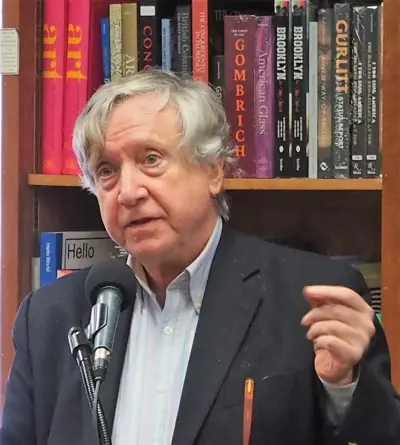
Robert Sean Wilentz is the Sidney and Ruth Lapidus Professor of the American Revolutionary Era at Princeton University, where he has taught since 1979. His primary research interests include U.S. social and political history in the nineteenth and twentieth centuries. He has written numerous award-winning books and articles including, most notably, The Rise of American Democracy: Jefferson to Lincoln, which was awarded the Bancroft Prize and was a finalist for the Pulitzer Prize.
