Douglas Coupland Quotes
Ten commandments yet seven deadly sins: conflict?
Coupland, Douglas. Generation X: Tales for an Accelerated Culture. St. Martin's Press, 1991.


This was a poem on copyright infringement which he held wrong. In American history, there has always been a significant part of the American population who were opposed to copyright on both moral and public policy grounds. In the first decades of existence, the United States did not legally recognize copyright. American publishers copied and republished English works with no compunctions. Benjamin Franklin was one of the worst offenders for people who saw it as an offence. English publishers and some American authors lobbied heavily in America and finally got Congress to pass copyright legislation. However, with every new technology, the battle is fought anew, and large numbers of Americans will use copyrighted material contrary to existing law and feel morally justified in doing so, Publishers and other owners of intellectual property then over compensate and they have lobbied heavily to stop what they call piracy by impinging what used to be the legitimate rights of consumers, readers and scholars—even those who were not violating copyright. It is another of those American political issues that never gets settled and is battled in almost every generation.


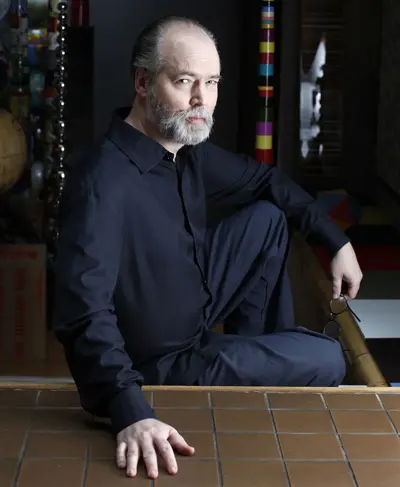
Douglas Coupland OC OBC (born 1961) is a Canadian novelist and artist. His fiction is complemented by recognized works in design and visual art arising from his early formal training. His first novel, the 1991 international bestseller Generation X: Tales for an Accelerated Culture, popularized the term such as McJob. He has published thirteen novels, two collections of short stories, seven non-fiction books, and a number of dramatic works and screenplays for film and television. He is a columnist for Financial Times. He is also a frequent contributor to The New York Times, e-flux journal, Dis, and Vice. His art exhibits include Everywhere Is Anywhere Is Anything Is Everything which was exhibited at the Vancouver Art Gallery, and the Royal Ontario Museum and the Museum of Contemporary Canadian Art, (now the Museum of Contemporary Art Toronto) and Bit Rot at Rotterdam's Witte de With Center for Contemporary Art and the Villa Stuck.
