Lucretius Quotes
Tempests, and bright lightnings, are to be sung; their nature is to be told, and from what cause they pursue their course; lest, having foolishly divided the heaven into parts, you should be anxious as to the quarter from which the flying flame may come, or to what region it may betake itself; and tremble to think how it penetrates through walled enclosures, and how, having exercised its power, it extricates itself from them. Of which phenomena the multitude can by no means see the causes, and think that they are accomplished by supernatural power.
Lucretius. On the Nature of Things. Translated by J. S. Watson, Henry G. Bohn, 1851, p. 260.


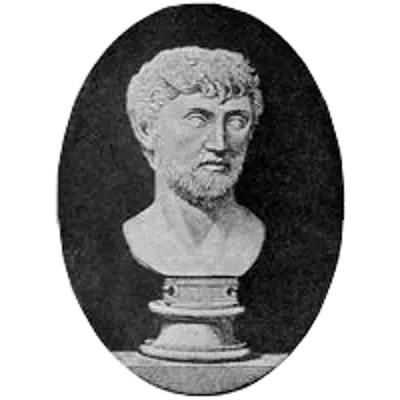
Titus Lucretius Carus (/ˈtaɪtəs luːˈkriːʃəs/ TY-təs loo-KREE-shəs, Latin: [ˈtɪtʊs lʊˈkreːtɪ.ʊs ˈkaːrʊs]; c. 99 – c. 55 BC) was a Roman poet and philosopher. His only known work is the philosophical poem De rerum natura, a didactic work about the tenets and philosophy of Epicureanism, and which usually is translated into English as On the Nature of Things. Lucretius has been credited with originating the concept of the three-age system that was formalised in 1836 by C. J. Thomsen.
