Charles Scott Sherrington Quotes
Synapse
He was the first scientist to use the word “Synapse”. He pioneered work in the connectivity of the neurons of the brain for which he won the Nobel Prize.
Charles Scott Sherrington Quoted by Idan Segev Lecture Series: Synapses, Neurons and Brains Hebrew University, Israel October / November 2016
Sourced by: Eigen's Political and Historical Quotations


He was the first scientist to use the word “neuron”.

Neiroscientists had learned that the brain is a complex set of Neurons, Axons and Dendrites which actually form millions of electro-chemical circuits with many circuits connected to others by the dendrites which function like wires. And they ahve shown that if circuits are wired togeter by dendrite connections, whan and electical charge is injected into one of the circuits, the other circuits whcih are connected to it by dendrites (wired together) will also have an electrical charge (fires). Combinations of many circuits wired together in different patterns actuall funtion like a computer and make decisions based on which ones are firing as a result of artificallyh injecting voltage or naturally increasing the voltage by stimulating the right organs. So when an eye sees an object moving from left to right it casues different circuts to fire from what happens when the object moves from right to lect and the brain can make a different set of decisions about what a hand should do to intercept the object for instance.


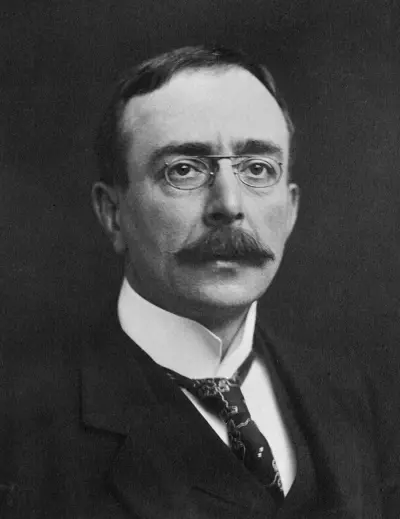
Sir Charles Scott Sherrington OM PRS FRCP FRCS was an English neurophysiologist, histologist, bacteriologist, and a pathologist, Nobel laureate and president of the Royal Society in the early 1920s. He received the Nobel Prize in Physiology or Medicine with Edgar Adrian, 1st Baron Adrian, in 1932 for their work on the functions of neurons. Prior to the work of Sherrington and Adrian, it was widely accepted that reflexes occurred as isolated activity within a reflex arc. Sherrington received the prize for showing that reflexes require integrated activation and demonstrated reciprocal innervation of muscles (Sherrington's law). Through his seminal 1906 publication, The Integrative Action of the Nervous System, he had effectively laid to rest the theory that the nervous system, including the brain, can be understood as a single interlinking network. His alternative explanation of synaptic communication between neurons helped shape our understanding of the central nervous system.
