Andrew Mellon Quotes
Surely we can afford to make a distinction between the people whose only capital is their mettle and physical energy and the people whose income is derived from investments. Such a distinction would mean much to millions of American workers and would be an added inspiration to the man who must provide a competence during his few productive years to care for himself and his family when his earnings capacity is at an end.
Although Mellon served as Treasury Secretary to three Republican Presidents, he favored taxing earned income at a much lower rate than investment income, on fairness and pragmatic grounds. But the Republicans not only did not take his advice but have managed to cut the tax rates for investment income (capital gains taxes) so that they were actually lower than what the middle class tax rates are for their earned income. So this quote is often used by Democrats and liberals in the taxation fight that is constant.
Andrew Mellon, 1855-1937, U. S. Treasury Secretary (Republican), Taxation: The People's Business, 1924
Sourced by: Eigen's Political and Historical Quotations


The debate over whether taxes that paid on stock market and other investment profits should be at the same rate as taxes paid on salaries or other earned income has been going on for many years. It usually plays out in an argument that capital gains taxes should be at a lower rate than regular income taxes. Policy on this issue has gone back and forth.

The only publication with a full time Poverty beat


Martin was explaining the position of Pope John Paul II.

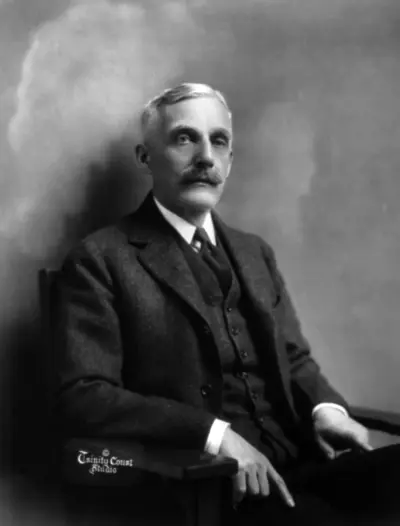
Andrew William Mellon, sometimes A.W., was an American banker, businessman, industrialist, philanthropist, art collector, and politician. From the wealthy Mellon family of Pittsburgh, Pennsylvania, he established a vast business empire before transitioning into politics. He served as United States Secretary of the Treasury from March 9, 1921, to February 12, 1932, presiding over the boom years of the 1920s and the Wall Street crash of 1929. A conservative Republican, Mellon favored policies that reduced taxation and the national debt in the aftermath of World War I.
