Arthur Schopenhauer Quotes
Suffering by nature or chance never seems so painful as suffering inflicted on us by the arbitrary will of another.


The Boers were the decedents of the original Dutch farmers who came to South Africa. They were uneducated, lower class emigrants from Holland who, unlike the British who came later and were primarily interested in trade, were farmers and wanted to acquire the rich South African land for permanent settlement with no place for the blacks who were emigrating from Central Africa to acquire the same land. The result was a conflict between the whites of South Africa—the Boers who wanted to own as much land as possible and wanted the Blacks to be their slaves or very low wage workers with no rights at all, and the English whose laws made the Blacks citizens with rights. When the English ended up controlling South Africa the Boers with their own Afrikaner language and culture felt that the English whites were selling them out. The lower class Boers were insulted that under the English law, they were no better than Black farmers. They wanted to separate from the English so they could totally dominate the Blacks and strived for independence which led to the Boer Wars. Although the Boers lost to the English, they bred and populated South Africa and eventually came to dominate it politically. It was the Boers—also called Afrikaners—who were the ones who introduced Apartheid and created the racist society that caused so much difficulty in the late 20th century.


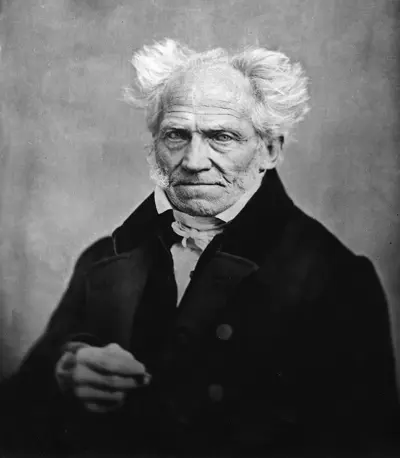
Arthur Schopenhauer was a German philosopher. He is best known for his 1818 work The World as Will and Representation (expanded in 1844), which characterizes the phenomenal world as the product of a blind and insatiable noumenal will. Building on the transcendental idealism of Immanuel Kant, Schopenhauer developed an atheistic metaphysical and ethical system that rejected the contemporaneous ideas of German idealism. He was among the first thinkers in Western philosophy to share and affirm significant tenets of Indian philosophy, such as asceticism, denial of the self, and the notion of the world-as-appearance. His work has been described as an exemplary manifestation of philosophical pessimism.
