Jenny Holzer Quotes
Stupid people shouldn’t breed.
Holzer, Jenny. Truisms. 1977-1979.


This book was the first popular attempt to spread the eugenics concept. Is was translated into German in 1925 and unfortunately read by Adolf Hitler who sent Grant a complimentary letter. See {603544}

There was a substantial movement to prevent mentally defective and people of low intelligence from being able to reproduce. Over 20 states, with the approval of the then Supreme Court performed forced state sterilizations. Of course the then definition of “degenerates” changed from state to state. A century later, American values changed so much that there is no state that would even consider involuntary sterilization and if they did, the Courts would hold it un-Constitutional.


The Association commissioned a study to develop:

The logic is that communities and areas—even countries have finite resources. Since we have a welfare society in which we will not allow people to starve, society must provide for children whose parents cannot. Therefore, individuals ought not to be allowed to breed beyond their ability to care for the children for if many would do so, the capacity of the community could be overwhelmed. A middle ground is that while the final decision should be left to the individual family, the society ought to educate and persuade members to limit their breeding.


At the time there were some Americans who supported Hitler and Fascism. Even senior military men like Osborne.
In one of the disgraces of American history, there was then an active Eugenics movement that advocated forced sterilization of people who were “unfit” to bear children. Over 20 states sterilized tens of thousands of American citizens who did not meet the “standards” of the state authorities who set the criteria of fitness. Sanger was one of those who called the implementation of Eugenics into question. However, note that even she accepted the notion of forced sterilization of mentally retarded people. Ironically, while some types of mental defects are heredity determined, others are not. The issue is a slippery slope under any conditions.

Fisher, a brilliant scientist and mathematician, engaged in some major blunders like denying that tobacco had any relationship to lung cancer and other disease. This was another. His “conclusion” that the more “successful” members of society should breed in preference to the less successful. There are three major fallacies in his argument and that of other eugenics supporters other than the obvious ethical and moral problems. First, human success in any society is determined by both genetic and environmental factors. In general, it is currently impossible to know who the successful would be if environmental factors were equal. Second, our concept of success is quite narrow from an evolutionary point of view. The most successful humans might be those who produce that most children, or those who extend man’s habitat, or those who will be most resistant to a pandemic that will arise in the near future. Third, by the standards of much of English society at the time, the most “successful” people were the monarchy and heredity aristocracy, There was already too much inbreeding in these groups and increasing this groups breeding rather than others would not only weaken the species over time, but would limit the variation that is necessary for natural selection and further evolution of the human species.

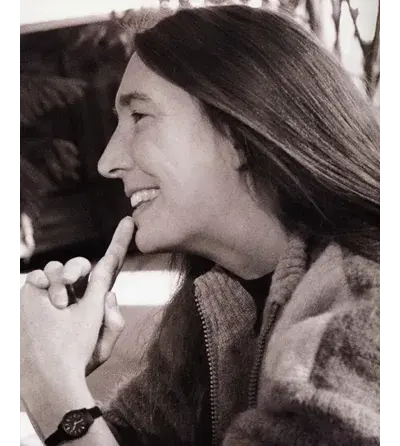
Jenny Holzer is an American neo-conceptual artist, based in Hoosick, New York. The main focus of her work is the delivery of words and ideas in public spaces.
