Jose Ortega y Gasset Quotes
Strictly speaking, the mass, as a psychological fact, can be defined without waiting for individuals to appear in mass formation. In the presence of one individual we can decide whether he is "mass" or not. The mass is all that which sets no value on itself good or ill based on specific grounds, but which feels itself "just like everybody," and nevertheless is not concerned about it; is, in fact, quite happy to feel itself as one with everybody else.
Ortega y Gasset, José. The Revolt of the Masses. W.W. Norton & Company, 1932, p. 14.


Samuel Langhorne Clemens, 1835-1910


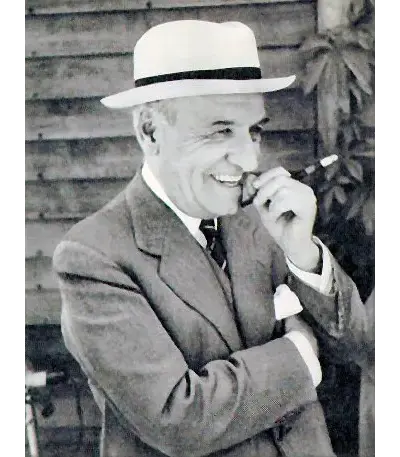
José Ortega y Gasset was a Spanish philosopher and essayist. He worked during the first half of the 20th century, while Spain oscillated between monarchy, republicanism, and dictatorship. His philosophy has been characterized as a "philosophy of life" that "comprised a long-hidden beginning in a pragmatist metaphysics inspired by William James, and with a general method from a realist phenomenology imitating Edmund Husserl, which served both his proto-existentialism (prior to Martin Heidegger's) and his realist historicism, which has been compared to both Wilhelm Dilthey and Benedetto Croce."
