Bernard DeVoto Quotes
Something can be done with people who put pickled onions in: strangulation seems best.
DeVoto, Bernard. The Hour. Houghton Mifflin, 1951, p. 38.

The New York City comptroller was outraged by the new president of the Board of Alderman, former congressman Fiorello La Guardia, who later became mayor of New York. The two men clashed constantly, especially at meetings of the New York City Board of Estimate, where the comptroller made an unusual request of the chairman:

A number of the American soldiers refused to obey Calley's illegal order. Some helped some villagers to escape, and a helicopter pilot landed betreen Callery's men and the villagers they were shooting at, and ordered his helicopter machine gun crew to fire on the soldiers if they did back off. The soldiers stopped firing at the civillians. However, his and other reports of the massacre were covered up by the military for a few years. Mai Lai was not the only major war crime perpetrated by Americans in the Vietnam War; there had been a few others. But given the years of fighting and the many opportunities war crimes violations under orders were quite rare. The Viet Cong had many more war crimes that they perpetrated, and our South Vietnamese allies repeatedly committed war crimes against their own people.


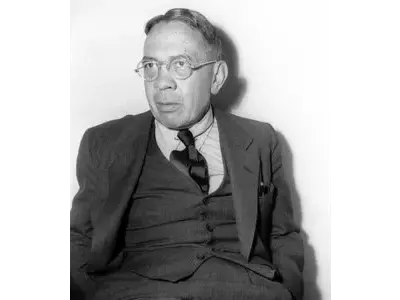
Bernard Augustine DeVoto (1897–1955), American historian, essayist, columnist, teacher, editor, and reviewer, was a lifelong champion of American Public lands and the conservation of public resources as well as an outspoken defender of civil liberties. He was the author of a series of Pulitzer-Prize-winning popular histories of the American West and for many years wrote The Easy Chair, an influential column in Harper's Magazine. DeVoto also wrote several well-regarded novels and during the 1950s served as a speech-writer for Adlai Stevenson. His friend and biographer, Wallace Stegner described Devoto as "flawed, brilliant, provocative, outrageous, ... often wrong, often spectacularly right, always stimulating, sometimes infuriating, and never, never dull."
