Joe Hill Quotes
Some things you didn't give away, no matter how much you owed.
Hill, Joe. NOS4A2. William Morrow, 2013, p. 411.


Other war criminals had committed suicide in conformity with the Japanese custom. But Tojo stayed alive so that he could take the responsibility from the Emperor Herohito who many Americans wanted tried for his actions and inactions during the war. But Tojo made an error. At the beginning of his trial he testified that he always obeyed the Emperor even though he was the Prime Minister and the head of government. Therefore, the Emperor was guilty of those crimes he had discussed with Tojo and the cabinet. Later, he was persuaded to change his testimony and said that he led the country to war and the Emperor wanted peace, a statement that few believed. See {587278}. While the Emperor had committed war crimes General MacArthur believed that the Emperor left in place and unpunished would make it easier to govern Japan, than if he were tried and punished. However, he and his staff fabricated a report to exonerate the Emperor rather than make his recommendation to his superiors and the President so they could either accept his view or not. He was a unilateralist in the administrative sense of the word. See {587279} for additional material on the Emperor’s guilt.

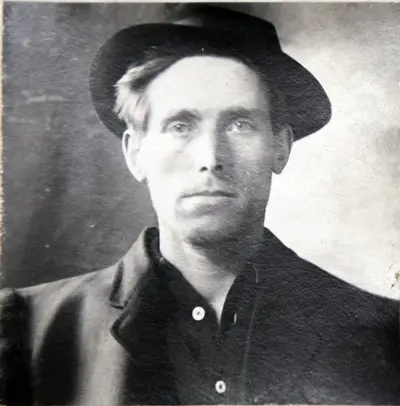
Joe Hill, born Joel Emmanuel Hägglund and also known as Joseph Hillström, was a Swedish-American labor activist, songwriter, and member of the Industrial Workers of the World (IWW, familiarly called the "Wobblies"). A native Swedish speaker, he learned English during the early 1900s, while working various jobs from New York to San Francisco. Hill, an immigrant worker frequently facing unemployment and underemployment, became a popular songwriter and cartoonist for the union. His most famous songs include "The Preacher and the Slave" (in which he coined the phrase "pie in the sky"), "The Tramp", "There Is Power in a Union", "The Rebel Girl", and "Casey Jones—the Union Scab", which express the harsh and combative life of itinerant workers, and call for workers to organize their efforts to improve working conditions.
