Winston Churchill Quotes
Socialism is a philosophy of failure, the creed of ignorance, and the gospel of envy, its inherent virtue is the equal sharing of misery.
This is a catenation of two separate quotes: (1) “Socialism is the philosophy of failure, the creed of ignorance, and the gospel of envy.” —Perth, Scotland, 28 May 1948, in Churchill, Europe Unite: Speeches 1947 & 1948 (London: Cassell, 1950), 347. (2) ("Equal sharing of miseries"): Spoken in the House of Commons on October 22, 1945: "The inherent vice of capitalism is the unequal sharing of blessings. The inherent virtue of Socialism is the equal sharing of miseries".
Winston Churchill, this quote is a catenation of two separate quotes from (1) Perth, Scotland, 28 May 1948, in Churchill, Europe Unite: Speeches 1947 & 1948 (London: Cassell, 1950), 347 and (2) spoken in the House of Commons on October 22, 1945. See linked quotes.


He was a major critic of Socialism but he did acknowledge that the Socialist Movement had made major contributions.

The Cuban dissidents and the CIA had assured President Kennedy and the Joint Chief’s of Staff that as soon as the CIA organized troops landed there would be uprisings throughout Cuba and the invaders would be supported by the Cuban people, happy to overthrow Castro. After the landing, there was not a single uprising nor was there any assistance provided to the invaders who were easily captured by Castro’s men. Castro was very popular. The CIA and Cuban dissidents were guilty of wishful thinking.


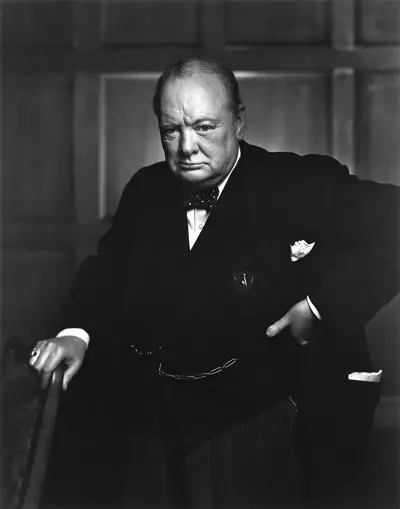
Sir Winston Leonard Spencer Churchill, KG, OM, CH, TD, DL, FRS, RA was the Prime Minister of the United Kingdom from 1940 to 1945, during the Second World War, and again from 1951 to 1955. Apart from two years between 1922 and 1924, Churchill was a Member of Parliament (MP) from 1900 to 1964 and represented a total of five constituencies. Ideologically an economic liberal and imperialist, he was for most of his career a member of the Conservative Party, as leader from 1940 to 1955. He was a member of the Liberal Party from 1904 to 1924. Churchill was also well known for his military career and as a historian, painter and writer, and among his many awards was the Nobel Prize in Literature.
