Boethius Quotes
So it follows that those who have reason have freedom to will or not to will, although this freedom is not equal in all of them. [...] human souls are more free when they persevere in the contemplation of the mind of God, less free when they descend to the corporeal, and even less free when they are entirely imprisoned in earthly flesh and blood.
Boethius. The Consolation of Philosophy. Translated by Richard H. Green, Bobbs-Merrill, 1962, p. 104.


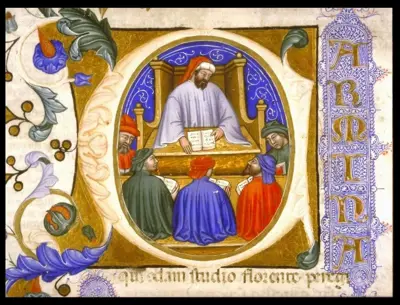
Anicius Manlius Severinus Boëthius, commonly called Boethius (/boʊˈiːθiəs/; also Boetius /-ʃəs/; c. 477 – 524 AD), was a Roman senator, consul, magister officiorum, and philosopher of the early 6th century. He was born about a year after Odoacer deposed the last Western Roman Emperor and declared himself King of Italy. Boethius entered public service under Ostrogothic King Theodoric the Great, who later imprisoned and executed him in 524 on charges of conspiracy to overthrow him. While jailed, Boethius composed his Consolation of Philosophy, a philosophical treatise on fortune, death, and other issues, which became one of the most popular and influential works of the Middle Ages. As the author of numerous handbooks and translator of Plato and Aristotle, he became the main intermediary between Classical antiquity and following centuries.
