Bernard Baruch Quotes
So efficient are the available instruments of slavery; fingerprints, lie detectors, brain washings, gas chambers; that we shiver at the thought of political change which might put these instruments in the hands of men of hate.
Baruch, Bernard M. Baruch: The Public Years. Holt, Rinehart and Winston, 1960.


Baldwin had written a book praising revolutionary communism in Russia, but like many other American socialists, grew disillusioned with Russian Communism and Joseph Stalin’s dictatorship especially when in 1939 the Russians became allied with Hitler and Germany. Russia’s repression of civil liberties was far worse than anything he had seen in America. He was so negative about Russian Communism that in the early 1940s, he ejected all members of the Communist Party from membership in the ACLU.


This was a preliminary ruling after the State of Missouri filed a lawsuit against the Biden Administration over federal officials pressuring social-media companies to police online speech about certain topics. An “Orwellian 'Ministry of Truth'” refers to the concept presented in George Orwell's dystopian novel, '1984.' In the novel, the Ministry of Truth is a governmental institution responsible for altering historical records and disseminating propaganda to manipulate and control public perception.


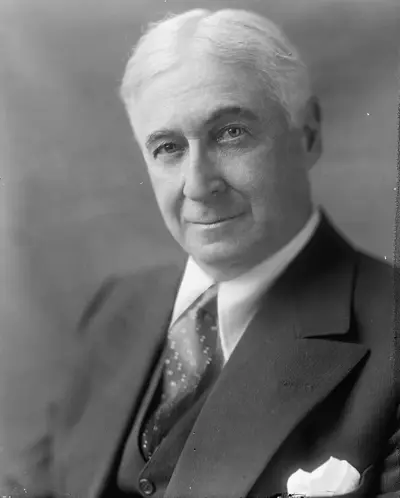
After amassing a fortune on the New York Stock Exchange, he impressed President Woodrow Wilson by managing the nation's economic mobilization in World War I as chairman of the War Industries Board. He advised Wilson during the Paris Peace Conference. He made another fortune in the postwar bull market, but foresaw the Wall Street crash and sold out well in advance. In World War II, he became a close advisor to President Roosevelt on the role of industry in war supply, and he was credited with greatly shortening the production time for tanks and aircraft. Later he helped to develop rehabilitation programs for injured servicemen. In 1946, he was the United States representative to the United Nations Atomic Energy Commission, though his Baruch Plan for international control of atomic energy was rejected by the Soviet Union.
