George Eliot Quotes
So deeply inherent is it in this life of ours that men have to suffer for each other's sins, so inevitably diffusive is human suffering, that even justice makes its victims, and we can conceive no retribution that does not spread beyond its mark in pulsations of unmerited pain.
Eliot, George. The Mill on the Floss. William Blackwood and Sons, 1860.


The British Empire had outlawed the slave trade and the United States had also done so. However, there was still a brisk slave trade where Black Africans were captured by Arab slavers and sold into slavery in Arabia. It was the open sore that had to be healed. See {609754}. He also used the phrase in his last letter, and it was engraved on his tomb in Westminster Abby. The Arab states were the last countries to legally abolish slavery in 1963—a century after this quotation. Still the anti slavery laws are weakly enforced so there is some slavery ongoing in the Middle East, Africa an parts of Asia still.


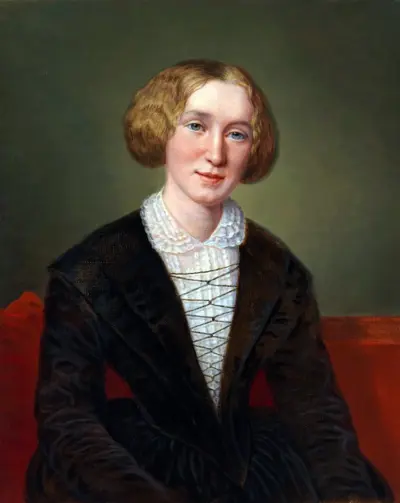
Mary Ann Evans, known by her pen name George Eliot, was an English novelist, poet, journalist, translator and one of the leading writers of the Victorian era. She wrote seven novels, Adam Bede (1859), The Mill on the Floss (1860), Silas Marner (1861), Romola (1862–63), Felix Holt, the Radical (1866), Middlemarch (1871–72) and Daniel Deronda (1876). Like Charles Dickens and Thomas Hardy, she emerged from provincial England and most of her works are set there. They are known for their realism, psychological insight, sense of place and detailed depiction of the countryside.
