Basil of Caesarea Quotes
She who has intentionally destroyed [the fetus] is subject to the penalty corresponding to a homicide. For us, there is no scrutinizing between the formed and unformed [fetus]; here truly justice is made not only for the unborn but also with reference to the person who is attentive only to himself/herself since so many women generally die for this very reason.
Basil of Caesarea. "Letter 188." Nicene and Post-Nicene Fathers, Second Series, Vol. 8. Edited by Philip Schaff and Henry Wace, Christian Literature Publishing Co., 1895, p. 225.


On this issue she and her father disagreed.


Churches are political organizations too and are subject to the forces of their membership. In the case of the Southern Baptist Convention in 1971 they passed resolutions to assure the right of a woman to have an abortion to protect her health. The position on abortion changed steadily thereafter to even pass Constitutional amendments to ban abortions except to save the life of the mother. See {614356},54122, {614358}, {614359}, {614360}, {614361} for the dynamic history of the change.

Paul had been the Libertarian Party Presidential Candidate and in keeping with the libertarian philosophy of the party supported the right to abortion and was adamant that the Government should stay away from such issues of morality. However, in 2007, he tried to secure the Republican Presidential Nomination. At that time the religious right dominated the Republican Party and opposition to abortion was a litmus test issue. Paul flip flopped, but it did him little good. The issue of the fetus and protection of the law is not the simple issue that Paul made it out to be. Even the most ardent supporters of abortion has argued that a fetus ought to be protected both civilly and criminally in law. Where the disagreement lies is at what point in time and/or development does the fetus constitute life and deserve the protection of life and how society shall deal with the conflicting life and health interests of mother and fetus.

Sanger thought of as a radical feminist by many, was actually opposed to most abortions. This was not opposed on Biblical or religious grounds however. She saw most (non-medically indicated) abortions as necessitated by accidental, undesired pregnancies or pregnancies of women who could not economically afford a child. She felt the latter could and should be solved by progressive social and economic policies. And the former, could be prevented by contraceptives where were rarely used as the result of ignorance and the illegality of the sale of most devices.

There is a very slight risk to the woman with a modern abortion procedure. There is a much greater risk to a woman who chooses to bring the fetus to term and give birth. The risk is small but it is 14 times more risk of maternal mortality (death to the mother) than with an abortion. There is also a much higher proportion of mental health problems (eg Post Partum Psychosis) for women who give birth. Most anti abortion advocates argue the issue on moral grounds and their view that we have a moral obligation not to take life. This has great legitimacy and there is a very large minority of Americans who agree with this position. However, anti-abortion advocates like Fortenberry who either are ignorant of the medical science and statistics or knows but lies about it, harm the cause they advocate for by coming across to many Americans as ignorant and/or untruthful, and they discredit the many fair and honest abortion foes.

In most parts of the country, if the legislators did not carve out the exceptions for rape incest and danger to the life of the mother, they would lose the majority of their support as most Americans who oppose the freedom of abortion that existed after Roe v. Wade, but really do not view abortion in the early trimester as murder. They just think that the regulation should be greater than it is.


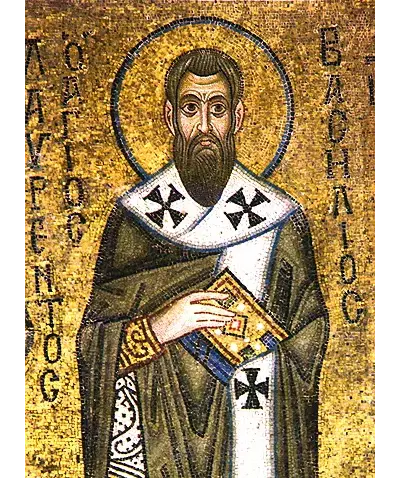
Basil of Caesarea, also called Saint Basil the Great was a bishop of Caesarea Mazaca in Cappadocia, Asia Minor (modern-day Turkey). He was an influential theologian who supported the Nicene Creed and opposed the heresies of the early Christian church, fighting against both Arianism and the followers of Apollinaris of Laodicea. His ability to balance his theological convictions with his political connections made Basil a powerful advocate for the Nicene position
