John Calvin Quotes
Scripture will ultimately suffice for a saving knowledge of God only when its certainty is founded upon the inward persuasion of the Holy Spirit. Indeed, these human testimonies which exist to confirm it will not be vain if, as secondary aids to our feebleness, they follow that chief and highest testimony. But those who wish to prove to unbelievers that Scripture is the Word of God are acting foolishly, for only by faith can this be known.
Calvin, John. Institutes of the Christian Religion. Edited by John T. McNeill, translated by Ford Lewis Battles, Westminster Press, 1960, p. 92.


Watchtower Bible and Tract Society of New York

The Creation Museum makes the Christian Fundamentalist Case for their alternative view of the creation of the earth and man. In the process, they make claims that are proven incorrect every day in science, like the earth is only about 6000 years old {641849} , and all the species on earth were then separately created in their immutable form with no evolutionary process. There are many deeply religious Christians who do not take the Bible literally and have no problem with evolution as the mechanism which God selected to create and develop life. The Roman Catholic Church, for example, does not maintain that the Bible is literally true and Evolution did not account for the development of life on earth. The major difference between most modern scientists, philosophers, and theologians, is that some believe that God of other Supreme Being had nothing to do with the evolution and development of life forms and those who believe that Evolution was the mechanism that God created and used. See {641848} for an example of the former.

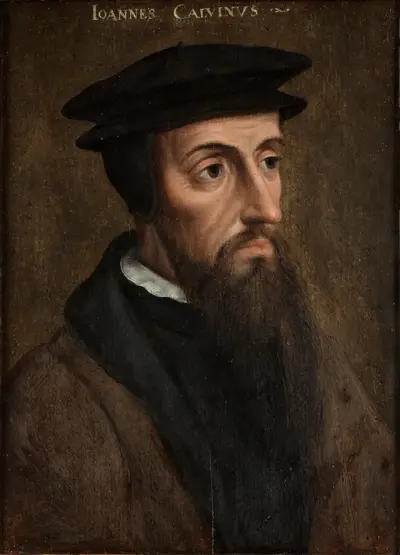
John Calvin was a French theologian, pastor and reformer in Geneva during the Protestant Reformation. He was a principal figure in the development of the system of Christian theology later called Calvinism, aspects of which include the doctrines of predestination and of the absolute sovereignty of God in salvation of the human soul from death and eternal damnation, in which doctrines Calvin was influenced by and elaborated upon the Augustinian and other Christian traditions. Various Congregational, Reformed and Presbyterian churches, which look to Calvin as the chief expositor of their beliefs, have spread throughout the world.
