Robert Grosseteste Quotes
Say to all small and great, and that often, that fully, quickly and willingly, without grumbling and contradiction, they do all your commands that are not against God.
Grosseteste, Robert. "The Rules of Saint Robert." Walter of Henley's Husbandry, translated by Elizabeth Lamond, Longmans, Green, and Co., 1890, pp. 121-145.


This Biblical quotation has been used for more than a thousand years by Christian authorities, civil and religious, to induce obedience to the existing authority and suppress revolution.


The chairman of the Public Works Committee doled out committee jobs in his home state. He was asked what these appointees did:

In 1902 there was a national crises brought about by a coal strike. At that time the president had no legal powers in such a matter. Lodge urged President Theodore Roosevelt to take a symbolic public stand on the strike issues. He did so, and it led to a successful arbitration of the dispute. It was one of the first examples of presidential "jawboning:"


McPherson was the first woman who preached over the radio. With the advent of radio for all purposes, stations were being erected all over the country and began to interfere with each others broadcast. Herbert Hoover saw this as a Federal Problem and authorized his administration to regulate the power and wavelength frequencies that stations could use for their broadcasts. McPherson had built the Angelus Temple in Echo Park with two huge radio towers but she was broadcasting “the word of God” and did not want to be restricted to broadcasting on a single frequency. She and others, even today, see any regulation of a religious activity as an impingement of freedom of speech and freedom of religion.

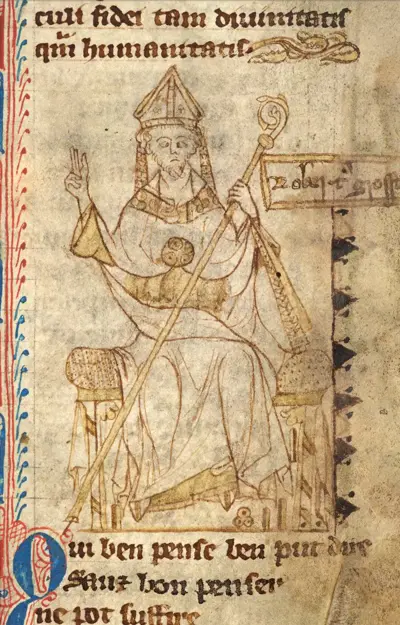
Robert Grosseteste was an English statesman, scholastic philosopher, theologian, scientist and Bishop of Lincoln. He was born of humble parents in Suffolk (according to the early 14th century chronicler Nicholas Trevet), but the associations with the village of Stradbroke is a post-medieval tradition. Upon his death, he was almost universally revered as a saint in England, but attempts to procure a formal canonisation failed. A. C. Crombie called him "the real founder of the tradition of scientific thought in medieval Oxford, and in some ways, of the modern English intellectual tradition".
