Noam Chomsky Quotes
Say the Pentagon Papers, - that material went much deeper. It went into internal government planning back for twenty - five years. Those are things that the public should have known about. In a democracy they should have known what leaders thinking and planning about major enterprises like the Vietnam war. It was kept secret from them.
Chomsky, Noam. Understanding Power: The Indispensable Chomsky. The New Press, 2002.


There are many things about our enemies which they know that we know which are still kept classified because it would be embarrassing for the government, a previous administration or to an agency to reveal it. There are some documents that are classified even thought the enemy knows we have the information because if the document were released the enemy might find out the sources of the information which they do not know. However often they know that too. Potential embarrassment and scandal are the main reasons for keepingthings that the enemy knoews we know secret.

When Bob Casey was the CIA Director, he the declassification of all the operational files of the WWII Office of Strategic Service. The huge collection is referred to as Record Book 2.6

One major theory is that most Government lies are perpetrated by Appointees who will only be working for the government for a few years. By the time the truth comes out, they are no longer in office and cannot be affected much by the revelation of the truth. The law actually protects most Federal Officials from criminal or civil penalties for most lies told while in office.


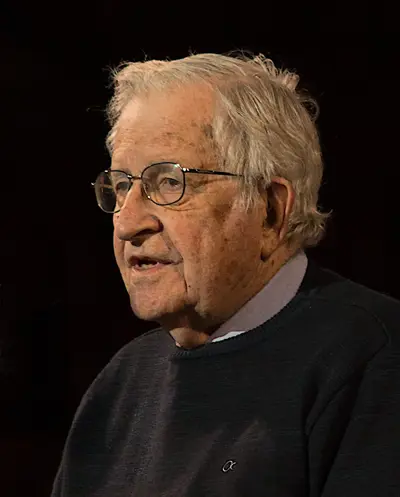
Avram Noam Chomsky is an American linguist, philosopher, cognitive scientist, historian, social critic, and political activist. Sometimes called "the father of modern linguistics", Chomsky is also a major figure in analytic philosophy and one of the founders of the field of cognitive science. He is Laureate Professor of Linguistics at the University of Arizona and Institute Professor Emeritus at the Massachusetts Institute of Technology (MIT), and is the author of more than 150 books on topics such as linguistics, war, politics, and mass media. Ideologically, he aligns with anarcho-syndicalism and libertarian socialism.
