Wole Soyinka Quotes
Sadly however, I discovered in one particular case that a colleague went and paid the bribe on my behalf, just to get our mission fulfilled. That was painful, and it strained our friendship.
Soyinka, Wole. You Must Set Forth at Dawn: A Memoir. Random House, 2006.


When asked why he did not accept the Royal Order of the Garter, one of England's highest distinctions, he replied: 2nd Viscount Melbourne

The bill went down to a narrow defeat, but the Republican leadership of the House held the vote open for a record setting 3 hours, until they could persuade enough members to reverse their vote. After the 3 hours, the bill passed by one vote. The House Ethics Committee did not see that as sufficient reason to start an ethics investigation.
She and her husband had been flown across the country for a campaign fundraiser by a private businessman in his corporate jet. Republican Speaker of the House Dennis Hastert was also on the flight. Her husband was censured for an ethical violation but Hastert was not.


While this was a terrific statement of the problem, Armenia was one of the more corrupt counties.

He was responding to the many conflcits of interest that President Donald Trump had with is many businesses. Trump had complained that this was incorrect and only a false perception.


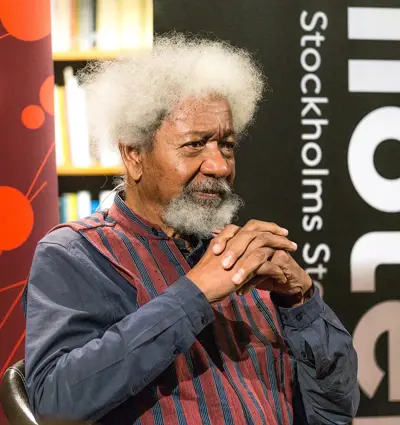
Akinwande Oluwole Babatunde Soyinka, known as Wole Soyinka (pronounced [wɔlé ʃójĩnká]), is a Nigerian playwright, novelist, poet, and essayist in the English language. He was awarded the 1986 Nobel Prize in Literature, the first sub-Saharan African to be honoured in that category. Soyinka was born into a Yoruba family in Abeokuta. In 1954, he attended Government College in Ibadan, and subsequently University College Ibadan and the University of Leeds in England. After studying in Nigeria and the UK, he worked with the Royal Court Theatre in London. He went on to write plays that were produced in both countries, in theatres and on radio. He took an active role in Nigeria's political history and its struggle for independence from Great Britain. In 1965, he seized the Western Nigeria Broadcasting Service studio and broadcast a demand for the cancellation of the Western Nigeria Regional Elections. In 1967, during the Nigerian Civil War, he was arrested by the federal government of General Yakubu Gowon and put in solitary confinement for two years.
