Michael McFaul Quotes
Russians don't want to fight ISIS in Syria. They want to leave that to us. Aside from that, I don't know what are the objectives that Mr. Trump seeks in having a good relationship with Mr. Putin.
McFaul, Michael. Interview by David Greene. Morning Edition, NPR, 13 Jan. 2017.


Assad was the autocratic ruler of Syria. In the second decade of the 21st century, a number of dissident groups started a rebellion. The Unied States and most of the EU countruies wanted to assist the rebels as Assad had been butchering his own people to put down the rebellion. Russia, in addition to having an allaince with Assad for a Navel Base in Syria, was very coincerned about the people replacing Assad if the revolution succeeded. The coalition of rebels was not at all a coalition and there was considerable fighting and hatred between them ISIS was one of the stringest groups and the Russians were worried that they might take over so they supported Assad and in 2016 actually intervened using Russian air power to support the Government troops. That turned the tide and teh rebellion was prevented from succeeding. The Russian leadership was distressed that the United States did not take their concerns seriouly enough and indeed after they were in teh fight, the United States had to deal with them about the fate of Syria, so it was a successful tactic.


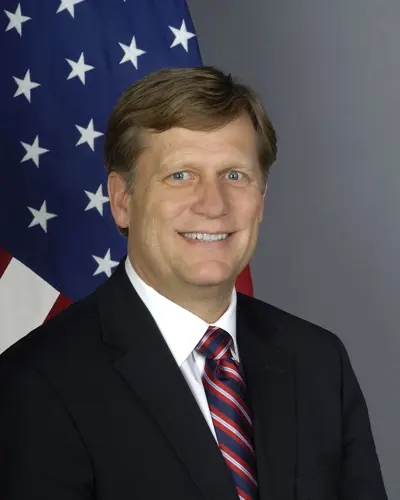
Michael Anthony McFaul is an American academic and diplomat who served as the United States Ambassador to Russia from 2012 to 2014. McFaul is currently the Ken Olivier and Angela Nomellini Professor in International Studies in the Department of Political Science at Stanford University, where he is the Director of the Freeman Spogli Institute for International Studies. He is also a Peter and Helen Bing Senior Fellow at the Hoover Institution. He is also a contributing columnist at The Washington Post. Prior to his nomination to the ambassadorial position, McFaul worked for the U.S. National Security Council as Special Assistant to the President and senior director of Russian and Eurasian affairs. In that capacity, he was the architect of U.S. President Barack Obama's Russian reset policy.
