Leonard Constant Lambert Quotes
Revolutionaries themselves are the last people to realize when, through force of time and circumstance, they have gradually become conservatives.
Leonard Constant Lambert, 1905-1951, English Critic & Music Conductor, The Revolutionary Situation, 1934
Sourced by: Eigen's Political and Historical Quotations


What if you are a conservative in a liberal environment? Then what you are conserving is liberalism.
His reference was to his experience as an undergraduate at Dartmouth, which he and associates views as a liberal organization, while others viewed it as a conservative bastion of the establishment.

This was one of the first instances of the political tactic of Triangulation, which President Clinton used so well to chart a middle course between the left wing of his own party and the Republican right wing extremists in Congress.


5th Earl of Rosebery. At this point in history, America was growing rapidly, but had not yet become a dominant superpower. Rosebery was prescient enough to realize that although England was the great superpower of the time, the very conservative values were holding the nation back. He saw America as the model, even when England was still the dominant empire in the world.


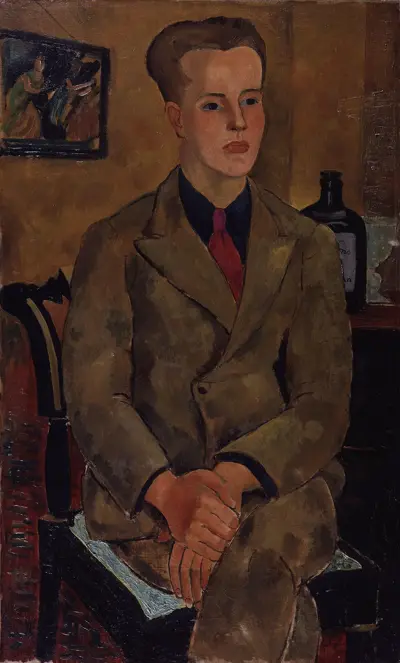
Leonard Constant Lambert was a British composer, conductor, and author. He was the Founder Music Director of the Royal Ballet, and (alongside Ninette de Valois and Frederick Ashton) he was a major figure in the establishment of the English ballet as a significant artistic movement. His ballet commitments, including extensive conducting work throughout his life, restricted his compositional activities. However one work, The Rio Grande, for chorus, orchestra and piano soloist, achieved widespread popularity in the 1920s, and is still regularly performed today. His other work includes a jazz influenced Piano Concerto (1931), major ballet scores such as Horoscope (1937) and a full-scale choral masque Summer's Last Will and Testament (1936) that some consider his masterpiece. Lambert had wide-ranging interests beyond music, as can be seen from his critical study Music Ho! (1934), which places music in the context of the other arts. His friends included John Maynard Keynes, Anthony Powell and the Sitwells.
