Theognis of Megara Quotes
Restrain thy mind, and let mildness ever attend thy tongue.
Theognis. The Works of Hesiod, Callimachus, and Theognis. Translated by J. Banks, Henry G. Bohn, 1856, p. 236.


1st Baron Clive. Clive went to India as a military accountant and clerk of the British East India Company which had its own Army intended for protection of Company staff and property. Clive worked his way up the military and company ladder and then commanded all the British (company) troops. Under his command the Company, in the name of the British Government actually began to rule territory at first buying that right from the Indian ruler for English pounds of silver. Then Clive used the Army to deal with disorder and banditry and took over new territory where local leaders had aided those who were harassing the British. Soon, he had control of more land than the rest of Britain together with many more people. In the process, his accounting skills served him well and the British East India Company had made a fortune larger than anything in British history and Clive himself became the richest man in England. There was a famine in India and Clive and the Company did little to alleviate the suffering. They continued to make huge profits while many of the people were dying, hence the nickname. The inquiry was called to see of Clive and the Company had been escessive in their rule and had taken too much profit.


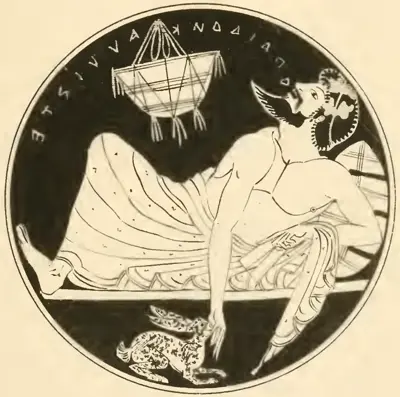
Theognis of Megara (Greek: Θέογνις ὁ Μεγαρεύς, Théognis ho Megareús) was a Greek lyric poet active in approximately the sixth century BC. The work attributed to him consists of gnomic poetry quite typical of the time, featuring ethical maxims and practical advice about life. He was the first Greek poet known to express concern over the eventual fate and survival of his own work and, along with Homer, Hesiod and the authors of the Homeric Hymns, he is among the earliest poets whose work has been preserved in a continuous manuscript tradition (the work of other archaic poets is preserved as scattered fragments). In fact more than half of the extant elegiac poetry of Greece before the Alexandrian period is included in the approximately 1,400 lines of verse attributed to him (though several poems traditionally attributed to him were composed by others, e.g. Solon, Euenos). Some of these verses inspired ancient commentators to value him as a moralist yet the entire corpus is valued today for its "warts and all" portrayal of aristocratic life in archaic Greece.
