Wole Soyinka Quotes
Religion is all based on the mentality of "I'm right", but now today it's moved from even the question of "I'm right and I'm willing to tolerate those who agree that I am right or those who don't disturb me anyway". Now, it's a question of "If you do not accept that I'm right, I have a right to kill you". That is the mentality of religious fundamentalism today. That is the meaning of the kind of terror which we are witnessing today, that everybody is expendable who do not actually physically line up behind me.
Soyinka, Wole. Interview. BBC News, 2014.


This statement of the Prophet is often quoted by Yusuf al-Qaradawi and other moderate, modernist Islamic clerics and leaders urging people to eschew terrorism and Muslim fundamentalist extremism.


This quotation is often given by those who believe that nothing has really changed regarding the Arabs and non-Islamic Westerners in the last century. While the support of dictators, Israel and support for that democracy, the artificial Western imposed borders, 9-11, or the Iraq war is often cited as the cause of Arab hostility and murderous aggression, as this quotation demonstrates, the problems and attitudes and behaviors existed long before any of these occurred. The borders were not set until after WWI and all the other causes occurred almost 50 years later, Yet there was still the propensity for fanaticism and violence. Sikes actually was one of those who was to determine the Arab borders, making one of the first “suggested” maps of the area for the English.


The President nominated Pat Garrett, the killer of Billy the Kid and others, as the Customs Collector of El Paso. This was a very significant position as Customs Duty was a primary source of Federal income in an era with no income tax. Garrett’s nomination, however, produced a firestorm of Texas opposition which surprised the President. It turned out that the famed lawman and gambler was not opposed because he had killed or gambled. He turned out to be an agnostic.


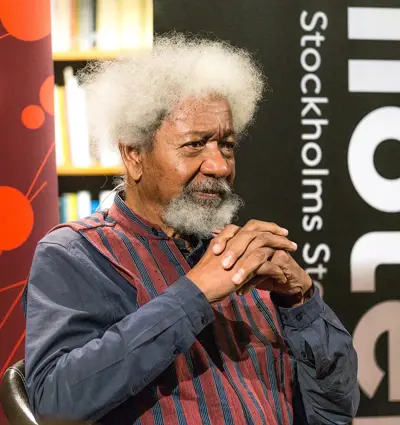
Akinwande Oluwole Babatunde Soyinka, known as Wole Soyinka (pronounced [wɔlé ʃójĩnká]), is a Nigerian playwright, novelist, poet, and essayist in the English language. He was awarded the 1986 Nobel Prize in Literature, the first sub-Saharan African to be honoured in that category. Soyinka was born into a Yoruba family in Abeokuta. In 1954, he attended Government College in Ibadan, and subsequently University College Ibadan and the University of Leeds in England. After studying in Nigeria and the UK, he worked with the Royal Court Theatre in London. He went on to write plays that were produced in both countries, in theatres and on radio. He took an active role in Nigeria's political history and its struggle for independence from Great Britain. In 1965, he seized the Western Nigeria Broadcasting Service studio and broadcast a demand for the cancellation of the Western Nigeria Regional Elections. In 1967, during the Nigerian Civil War, he was arrested by the federal government of General Yakubu Gowon and put in solitary confinement for two years.
