Theognis of Megara Quotes
Ram, ass, and horse, my Kyrnos, we look over
With care, and seek good stock for good to cover;
And yet the best men make no argument,
But wed, for money, runts of poor descent.
So too a woman will demean her state
And spurn the better for the richer mate.
Money's the cry. Good stock to bad is wed
And bad to good, till all the world's cross-bred.
No wonder if the country's breed declines-
Mixed metal, Kyrnos, that but dimly shines.
Theognis. Hesiod and Theognis. Translated by Dorothea Wender, Penguin Books, 1973, p. 101.


Agassiz, a prominent Harvard professor was considered the leading biological and zoological scientist in America, Yet he was totally wrong about most of his conclusions regarding regarding species and races from horses to humans. He was one of the few scientists who rejected Darwin’s approach to evolution and that that Asians, Blacks, Whites and Indians were separate species and other erroneous things as this quote about mixed race humans.

Actually, The Theory of Evolution shows no such thing. Diversity is critical for Natural Selection to function. It is the inbred Royalty of Europe that showed a propensity to various defects and abnormalities. There are millions of examples where the offspring of a couple are superior to both parents with respect to a characteristic. Some also who are inferior to both parents. Then there are some “in-between”. Traits in evolution and generics are not subject to a simple averaging.

Darwin was not only favorable towards Blacks—see {621212}—but thought the political opposition to racial intermarriage and interbreeding unscientific. He believed that science could demonstrate that there was no genetic deterioration in miscegenation. Today there has been enough biracial marriage and children that it is clear that there is no difference in intelligence or other important characteristics. Despite this, the claim of racial destruction has been the claim of Nazis and other racists. See {621215}


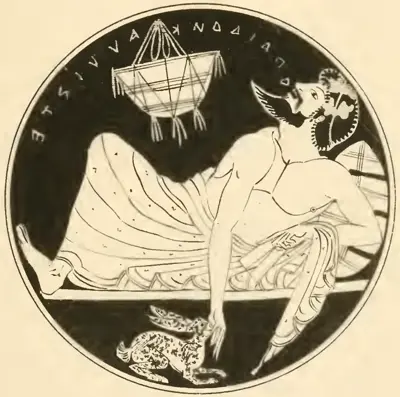
Theognis of Megara (Greek: Θέογνις ὁ Μεγαρεύς, Théognis ho Megareús) was a Greek lyric poet active in approximately the sixth century BC. The work attributed to him consists of gnomic poetry quite typical of the time, featuring ethical maxims and practical advice about life. He was the first Greek poet known to express concern over the eventual fate and survival of his own work and, along with Homer, Hesiod and the authors of the Homeric Hymns, he is among the earliest poets whose work has been preserved in a continuous manuscript tradition (the work of other archaic poets is preserved as scattered fragments). In fact more than half of the extant elegiac poetry of Greece before the Alexandrian period is included in the approximately 1,400 lines of verse attributed to him (though several poems traditionally attributed to him were composed by others, e.g. Solon, Euenos). Some of these verses inspired ancient commentators to value him as a moralist yet the entire corpus is valued today for its "warts and all" portrayal of aristocratic life in archaic Greece.
