Aristotle Quotes
Purpose is a desire for something in our own power, coupled with an investigation into its means.


The delegates to the 1787 Constitutional Convention were all men with different opinions. So the intent of the Framers might mean: The intent of the individual who proposed the section, the men who spoke on that section, the majority who voted to keep it in the document. This would be hard enough if there were a transcript of the debate, but there was not. We only have the notes of Madison and a few others at different times. And even they did not know the intentions on a given issue of delegates who did not speak. George Washington, for example, never spoke for or against any particular section of the Constitution. We can infer his intentions from other writings sometimes, but what about the delegates who did not write as much or whose letters and papers have not been found or preserved? The judges who must decide on constitutionality do the best that they can, and there is ALWAYS disagreement when judges make such a judgments and render an opinion.


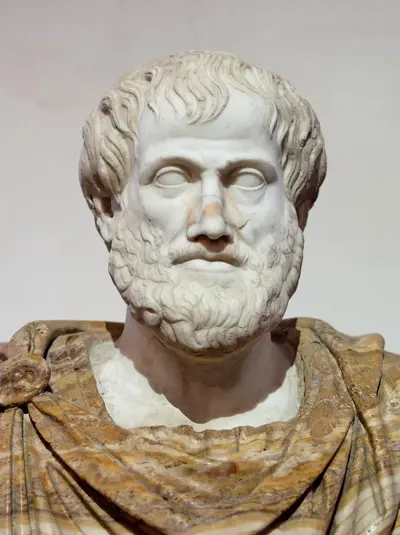
Aristotle (/ærɪˈstɒtəl/; Greek: Ἀριστοτέλης Aristotélēs, pronounced [aristotélɛːs]; 384–322 BC) was a Greek philosopher and polymath during the Classical period in Ancient Greece. Taught by Plato, he was the founder of the Lyceum, the Peripatetic school of philosophy, and the Aristotelian tradition. His writings cover many subjects including physics, biology, zoology, metaphysics, logic, ethics, aesthetics, poetry, theatre, music, rhetoric, psychology, linguistics, economics, politics, meteorology, geology and government. Aristotle provided a complex synthesis of the various philosophies existing prior to him. It was above all from his teachings that the West inherited its intellectual lexicon, as well as problems and methods of inquiry. As a result, his philosophy has exerted a unique influence on almost every form of knowledge in the West and it continues to be a subject of contemporary philosophical discussion.
