Max Stirner Quotes
Protestantism has actually put a man in the position of a country governed by secret police. The spy and eavesdropper, 'conscience,' watches over every motion of the mind, and all thought and action is for it a 'matter of conscience,' i.e. police business.
Stirner, Max. The Ego and His Own. Translated by Steven T. Byington, Benjamin R. Tucker, 1907, p. 116.


While the Visigoths had some very advanced legal principles, this law, quoted in its entirety is typical of the nations that were part of the Catholic world. The church and its doctrines were immune from any possible criticism, explicit or implicit. This is the most formalized and sophisticated compendium of laws of the so-called “barbaric peoples” of Europe. The compilation was in many ways a documentation of the traditional laws of the Visigoths that had evolved over hundreds of years.

What the historian did not know was how similarly the Protestants would behave against the Catholics when they had the power. Since the Catholics were the established church, and the Protestants the new “heretics” the Protestants were on the receiving end of most of the atrocities at the beginning. However, as if they had been scholled by their horrible experiences, they repeated them just exchanging the perpetrators and the victims.

In this extraordinary act, the people who are persecuted are made to pay extra taxes to facilitate their persecution

It was uttered in the King’s name by soldiers and officials throughout the land. It is not certain that the exact words of choice were created by Louis but they were uttered in his name. Protestants had been given the right to practice their religion in France by the King’s grandfather (the Edict of Nantes {617664}), but Louis XIV rescinded that {617765} and gave Protestants this choice. Some converted. Some were murdered. Some escaped to other countries.

While only certain kinds of songs were prohibited, all dancing was. This prohibition exists to this day in some Protestant sects.


The Taliban opposed all education except orthodox Muslim religious education.

Baldwin had written a book praising revolutionary communism in Russia, but like many other American socialists, grew disillusioned with Russian Communism and Joseph Stalin’s dictatorship especially when in 1939 the Russians became allied with Hitler and Germany. Russia’s repression of civil liberties was far worse than anything he had seen in America. He was so negative about Russian Communism that in the early 1940s, he ejected all members of the Communist Party from membership in the ACLU.

He had just vetoed a bill to impose censorship on plays and dramas.


This was a preliminary ruling after the State of Missouri filed a lawsuit against the Biden Administration over federal officials pressuring social-media companies to police online speech about certain topics. An “Orwellian 'Ministry of Truth'” refers to the concept presented in George Orwell's dystopian novel, '1984.' In the novel, the Ministry of Truth is a governmental institution responsible for altering historical records and disseminating propaganda to manipulate and control public perception.


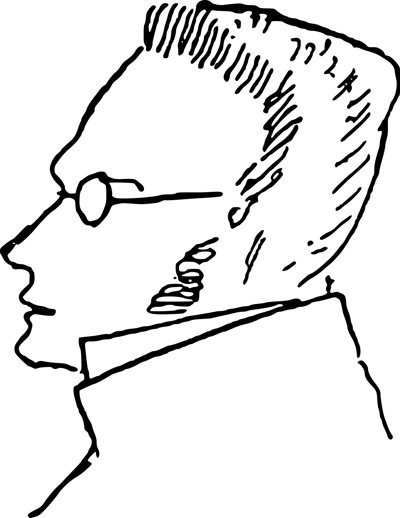
Johann Kaspar Schmidt, known professionally as Max Stirner, was a German post-Hegelian philosopher, dealing mainly with the Hegelian notion of social alienation and self-consciousness. Stirner is often seen as one of the forerunners of nihilism, existentialism, psychoanalytic theory, postmodernism and individualist anarchism.
