Sophocles Quotes
Profit is sweet, even if it comes from deception.
Sophocles. Fragments. Edited and translated by Hugh Lloyd-Jones, Harvard University Press, 1996, p. 385.


Executed by the English for his part in the Easter Uprising.

Henry Wheeler Shaw 1818-1885

Franklin was the superstar of his day in terms of popularity—especially in Europe. However, his informal, social style together with his late hours and popularity with the ladies, together with the fact that he seemed on good social terms with even enemies developed a combination of jealousy, frustration and even suspicion by some of his diplomatic colleagues.

Abramoff had bribed over 100 Congressional offices by a combination of campaign donations, paid golf junkets all over the world, free elegant meals at his own fancy Washington Restaurant, free tickets for the Congressmen, their staffs and their major constituents, to Concerts and sporting events including his own Skyboxes, and promises of future employment at very high salaries. Ironically, we was convicted of cheating some of his lobbying clients and did a jail term, but his “bribery” was technically usually legal. In addition to Abramoff, only one Congressman was charged and convicted of corruption, when many if not most had engaged in these corrupt practices. Congress makes the rules with loopholes so that what is bribery and corruption in any other setting is often not against the law if Congress is involved.


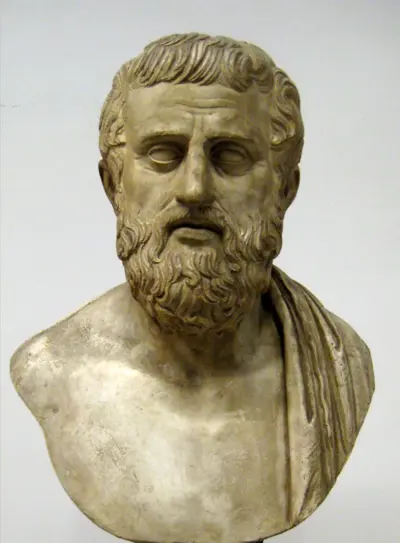
Sophocles (/ˈsɒfəkliːz/; Greek: Σοφοκλῆς, pronounced [so.pʰo.klɛ̂ːs]; c. 497/6 – winter 406/5 BC) is one of three ancient Greek tragedians whose plays have survived. His first plays were written later than, or contemporary with, those of Aeschylus; and earlier than, or contemporary with, those of Euripides. Sophocles wrote over 120 plays, but only seven have survived in a complete form: Ajax, Antigone, Women of Trachis, Oedipus Rex, Electra, Philoctetes and Oedipus at Colonus. For almost fifty years, Sophocles was the most celebrated playwright in the dramatic competitions of the city-state of Athens which took place during the religious festivals of the Lenaea and the Dionysia. He competed in thirty competitions, won twenty-four, and was never judged lower than second place. Aeschylus won thirteen competitions, and was sometimes defeated by Sophocles; Euripides won four.
