Alexander Haig Quotes
Prior to his takeover of Iran, Ayatollah Khomeini was camping near Paris, giving daily news conferences to a fawning international press corps without a murmur of complaint to France from the United States about the disaster it was coddling in the incredibly naive liberal belief that this extremist cleric would be an improvement over the Shah.
Haig, Alexander. Interview on the Middle East. Newsmax, 2002.


A few years later, the Iranian revolution transformed our ally to whom we had sold arms. Then Iran-Contra reopened the issue of arms and Iran.


The Shah of Iran was one of the worst violators of human rights in the world. His secret security service were brutal thugs who murdered and tortured with impunity. Carter however in most other instances made human rights a centerpiece of his foreign policy. In Iran he overlooked the human rights abuses as the United States needed the Iranian oil. When the Iranians finally revolted against the Shah, they resented Carter and the United States for allowing the Shah to operate his empire with no regard for civil rights while the U. S. continued to preach about human rights. When the Iranians established their revolutionary government, they got the worst of all worlds. Iran became a fundamentalist theocracy, had their economy deteriorate despite their oil wealth, and the Human Rights violations of the Revolutionary Government were worse than the terrible record of the Shah.

Ahmed Khomeini, son of Iranian leader Ayatollah Ruhollah Khomeini is the Mrs. Wilson of modern Iran.
During the last year of Woodrow Wilson's presidency, unknown to the public, First Lady, Edith Bolling Wilson, virtually ran the administration because of her husband's illness and debilitation. In the latter months of the Ayatollah’s life, he was non functional and his son was running the government without telling the public.


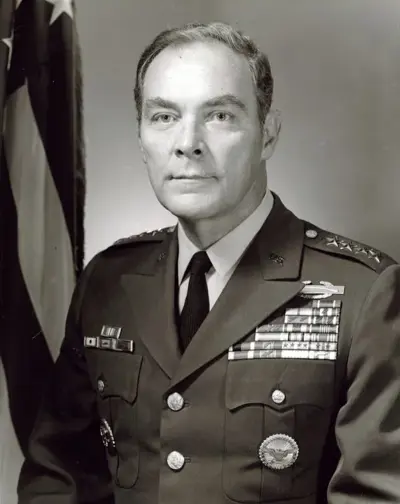
Alexander Meigs Haig Jr. was the United States Secretary of State under President Ronald Reagan and the White House chief of staff under presidents Richard Nixon and Gerald Ford. Prior to these cabinet-level positions, he retired as a general from the United States Army, having been Supreme Allied Commander Europe after serving as the vice chief of staff of the Army.
