Ambrose Bierce Quotes
Presidency: The greased pig in the game of American politics.
Originally published as The Cynic’s Word Book
Ambrose Bierce, 1842-1914?, Journalist & Political Columnist, The Devil's Dictionary 1906
Sourced by: Eigen's Political and Historical Quotations


Attacking FDR by pandering to anti-Semites and falsely claiming that a Jewish financier, Bernard Baruch ran the government: The Priest was the right wing demagogic radio host of his day. Virulently anti-Semitic and anti-Black, he was threatened with excommunication by the Catholic Church, which finally ordered him to cease us weekly radio show and stop the political hate.


Although a right wing conservative, he shared the view of many liberals that it costs so much money and needs so many rich contacts to raise enough money to run for President, that the reality is beyond the reach of ordinary Americans. Since Harry Truman, all the Presidents have been affluent, and most millionaires.


His role was the equivalent of the Mayor of Washington DC. Even though the Congress had generally been the most powerful branch of the government, public opinion on this was beginning to shift at the turn of the 20th century.

He was alluding to Matthew 7:7; Luke 11:9, 12:31


Periodically in American history, there has been a struggle between the Executive Branch and the Senate for dominance. The Senate’s power is negative however. It can block things, but cannot directly make them happen. The President can do both.


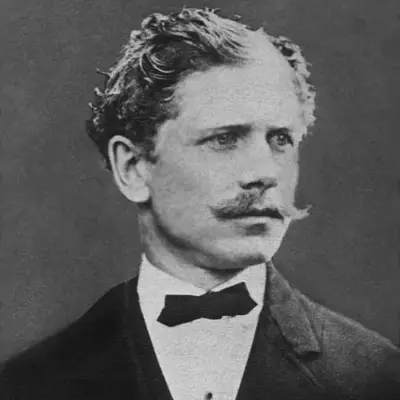
Ambrose Gwinnett Bierce was an American short story writer, journalist, poet, and Civil War veteran. His book The Devil's Dictionary was named as one of "The 100 Greatest Masterpieces of American Literature" by the American Revolution Bicentennial Administration. His story "An Occurrence at Owl Creek Bridge" has been described as "one of the most famous and frequently anthologized stories in American literature"; and his book Tales of Soldiers and Civilians (also published as In the Midst of Life) was named by the Grolier Club as one of the 100 most influential American books printed before 1900.
