William Rehnquist Quotes
Pregnancy is of course confined to women, but it is in other ways significantly different from the typical covered disease or disability.
The ruling allowed GE's employee disability insurance plan to exclude conditions arising from pregnancy. Many critics argue that the same policies paid for Viagra for men which is also significantly different.
William Rehnquist, 1924-2005, Chief Justice, U. S. Supreme Court, General Electric Co. v. Gilbert, 429 U.S. 125, 1976
Sourced by: Eigen's Political and Historical Quotations


If a state or community legally decides that a fetus is a person, there are many situations where there is a conflict of interest between the mother to be and the fetus. A pregnant woman, having a single drink of alcohol, potentially dangers the fetus (called Fetal Alcohol Syndrome). Smoking is clearly hazardous to the health of the fetus (underweight babies and more infant mortality and even more SIDS deaths. A diet to keep a mother thinner may not be nutritious for the fetus, A few states and local government have started prosecuting pregnant women for their personal behavior that might be detrimental to the fetus—often the purpose is to assert the right of the state to regulate the behavior of the pregnant woman so that the state can control abortion.


Birth control was not commonly available and knowledge about it was also sparce. Having many children was the “will of God” in common parlance.


We think of Puritans as very straight-laced and somewhat hateful towards women (having burned so many at the stake) but there was another side to the sect, perhaps as far ahead of their time as their witch hunts were backward.


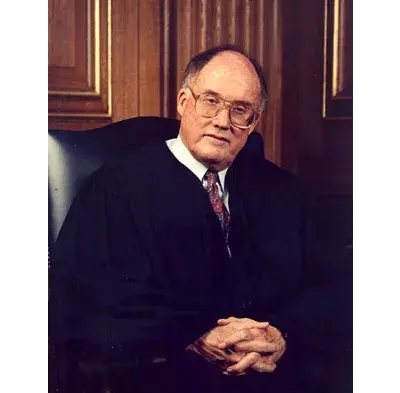
William Hubbs Rehnquist was an American lawyer and jurist who served on the Supreme Court of the United States for 33 years, as an associate justice from 1972 to 1986 and as Chief Justice from 1986 until his death in 2005. Considered a conservative, Rehnquist favored a conception of federalism that emphasized the Tenth Amendment's reservation of powers to the states. Under this view of federalism, the court, for the first time since the 1930s, struck down an act of Congress as exceeding its power under the Commerce Clause.
