David Brooks Quotes
Politically, you can’t do pain without the gain.
David Brooks, Political Journalist & Columnist, PBS The Charlie Rose Show, June 22, 2011
Sourced by: Eigen's Political and Historical Quotations


Some politicians tell their constituents that they compromise but not on principles. This is illusory and often disingenuous as well. In a democracy there are many sets of principles that conflict with others just as deeply and frequently held. Even many of the principles of the U. S. Constitution conflict with other constitutional principles. If politicians never compromised on principles and ideals, there would be no operational government unless it were a theocracy or a dictatorship where there were only one set of principles in the society. The more democratic a society is the more its politicians must compromise with their fundamental principles and ideals.

This statement is referring to the custom of women covering their eyes whenever a man who they did not know passed them. Turks did not ever use Burkas the way some other Muslim countries do, but they wore headscarves and covered their eyes when a strange man appeared. This was a shocking statement in a sexist Islamic culture. Although the process of modernization and reform in Turkey was relatively bloodless, Ataturk was prepared to and did use force to defend it. This and many others made the role of women not only uniquely equal in the Islamic world, but women were suddenly elevated to the level of most Western nations and in voting rights were ahead of most. He used his own family to set an example. See {584503}.


See FDR’s quotations {32446} & {642798} on experimentation for an extension of Jefferson’s hope.


Emanuel argued that when the nation faced a crisis of one kind or another, and the administration had to take steps to cope with the crisis or ameliorate it, the time is often opportune to get some of their legislative program passed or reform areas that have been resistant.


Although most consider Keynes a liberal, in many areas he was very conservative, and this is one. He opposed change and reform unless the degree of benefit would be very large. He is one of the few reformers who appreciated that there was a cost to society for making any change in that people are discomforted by change, and then there is the potential “evil” of the unintended consequences of the transition period.
This admonition of his applied not only to initiating war, but to increasing unemployment for a worthy purpose like controlling inflation. He sought solutions where pain was borne by tall if necessary, but not to particular subgroups (identifiable or not) to the degree that they would suffer badly. In general, we should not sacrifice some for the good of the whole without their volunteering, as in a volunteer army.

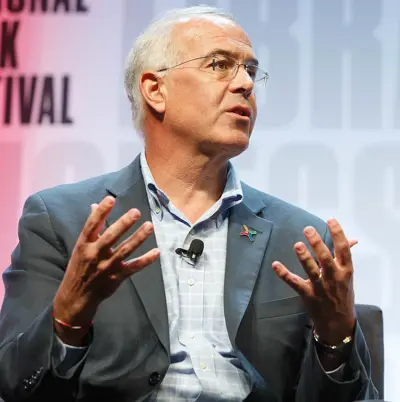
David Brooks is a conservative political and cultural commentator who writes for The New York Times. He has worked as a film critic for The Washington Times, a reporter and later op-ed editor for The Wall Street Journal, a senior editor at The Weekly Standard from its inception, a contributing editor at Newsweek, and The Atlantic Monthly, and a commentator on NPR and the PBS NewsHour.
