Apollonius of Tyana Quotes
Plato said that virtue has no master. If a person does not honor this principle and rejoice in it, but is purchasable for money, he creates many masters for himself.
Philostratus. The Life of Apollonius of Tyana, The Epistles of Apollonius and the Treatise of Eusebius. Translated by F. C. Conybeare, vol. 2, William Heinemann, 1912.


See {640733} for an English political leader’s similar view.


1st Earl of Beaconsfield

A conservative Calvinist weekly periodical. Just as today, there were few politicians who could stand up to such a test.


Samuel Langhorne Clemens, 1835-1910. From the point of view of the person or company that bribes or gives campaign contributions to legislators, there has often been a problem that when the heat is on the legislator might begin to refrain from voting as was expected. Twain was joking in this quotation by using the world “morality” to describe the obligation of the legislator to vote for the interest of the briber or campaign contributor. However, there were several major businessmen who actually saw the bribed legislator as having a moral and ethical duty to continue to protect the interest of the briber.


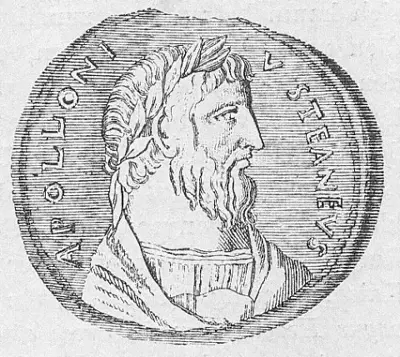
Apollonius of Tyana (Ancient Greek: Ἀπολλώνιος ὁ Τυανεύς; c. 3 BC – c. 97 AD), sometimes also called Apollonios of Tyana, was a Greek Neopythagorean philosopher from the town of Tyana in the Roman province of Cappadocia in Anatolia. He is the subject of Life of Apollonius of Tyana, written by Philostratus over a century after his death.
