Ambrose Bierce Quotes
PIRACY, n. Commerce without its folly-swaddles, just as God made it.
Bierce, Ambrose. The Devil's Dictionary. The Neale Publishing Company, 1911, p. 256.


3rd Earl Russell of Kingston. Ironically he was regarded as a socialist by most people. His view of socialism however was what evolved as European Democratic Socialism and not the “dictatorship or the proletariat” type of Communist Socialism.


Like many ideological political philosophers who developed a following, she tended to exaggerate many of her points and to ignore additional factors. While individual businessmen and politicians pursuing their self interests were certainly necessary for America’s great growth and success, they were not sufficient. Many of the founding fathers sacrificed their fortunes and in some cases their lives to gain American independence. And the sacrifice of millions was necessary in many conflicts were those who fought were rarely enlarging their own fortunes. And equally important factors of American success were the collective action of communities creating schools, roads, bridges, canals. The driver of the businessmen to move into critical areas was the government subsidizing the railroads, proving the telegraph useful, developing the national highway system and the Internet. Most of the great universities and research centers were created as government, charitable or religious institutions where personal profit was not a factor. It is that combination of private and public, self serving and communitarian drives, secular and religious that have created modern America. Many people in Rand’s ere did not credit the private, self serving contributions of many great men, and Rand led the movement to remind all of that critical factor. In the process of making her good point, she tended to ignore the other factors.
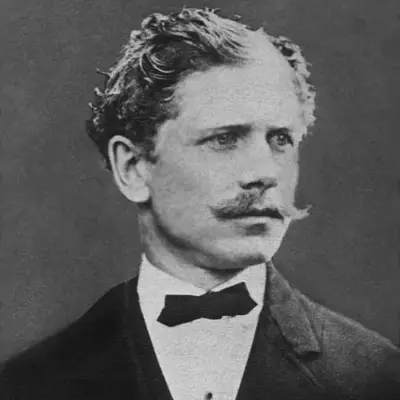
Ambrose Gwinnett Bierce was an American short story writer, journalist, poet, and Civil War veteran. His book The Devil's Dictionary was named as one of "The 100 Greatest Masterpieces of American Literature" by the American Revolution Bicentennial Administration. His story "An Occurrence at Owl Creek Bridge" has been described as "one of the most famous and frequently anthologized stories in American literature"; and his book Tales of Soldiers and Civilians (also published as In the Midst of Life) was named by the Grolier Club as one of the 100 most influential American books printed before 1900.
