Wilhelm Wundt Quotes
Physiology is concerned with all those phenomena of life that present them selves to us in sense perception as bodily processes, and accordingly form part of that total environment which we name the external world.
Wundt, Wilhelm. Principles of Physiological Psychology. Translated by Edward Bradford Titchener, vol. 1, The Macmillan Company, 1904, p. 1.


The law is far behind science in many areas, but one dramatic one is the notion of life itself. For the criminal law and for benefits entitlement, when life begins and when it ends are traditionally important. Yet is a very complex question in many cases. Abortion is another controversial area. Under ancient Jewish Law, a fetus is considered a living person when the crown of the head can be viewed from the mother’s vagina. Modern science has demonstrated that depending on how you define life, the fetus itself is alive during the pregnancy. But if one goes further with modern science, the sperm and egg cells are alive before conception. So are millions of other cells in the human body which we kill routinely—some intentionally as when we take an antibiotic to terminate “undesirable” bacteria. Many orthodox Hindus who will not kill living animals will kill living cells such as when they eat yogurt. Scientists have in recent times resisted trying to define the term “living” not only because of its complexity, but because almost any definition would soon be obsoleted by new knowledge which is accumulating so rapidly. Science simplifies and clarified many phenomena, but also makes others much more complex.
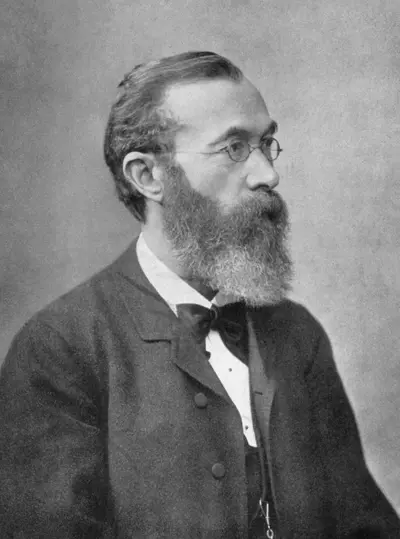
Wilhelm Maximilian Wundt was a German physiologist, philosopher, and professor, known today as one of the founders of modern psychology. Wundt, who distinguished psychology as a science from philosophy and biology, was the first person ever to call himself a psychologist. He is widely regarded as the "father of experimental psychology". In 1879, at University of Leipzig, Wundt founded the first formal laboratory for psychological research. This marked psychology as an independent field of study. By creating this laboratory he was able to establish psychology as a separate science from other disciplines. He also formed the first academic journal for psychological research, Philosophische Studien (from 1881 to 1902), set up to publish the Institute's research.
