Noah Webster Quotes
Petty juries, consisting usually of twelve men, attend courts to try matters of fact in civil causes, and to decide both the law and the fact in criminal prosecutions. The decision of a petty jury is called a verdict.
Note that in his very definition of a Petty Jury the right of the jury to ignore the judge's instructions in criminal matters wasa assumed--not some novel idea. Jury nullification has been a part of the American Criminal Justice System from the inception of the nation.
Noah Webster, Noah Webster, Dictionary of the English Language, 1828
Sourced by: Eigen's Political and Historical Quotations

This is a very important and fundamental quotation. Jefferson, John Adams, John Jay and many other Founding Fathers told us that the jury of peers was the final arbiter of a court case. However, many modern judges and legislatures have tried to erode that principle. In most states judges instructs juries that they are the final arbiter of the facts but he/she is the final arbiter of the law and how it should be applied in the case. But the founders wanted the jury to be the final arbiters of the law as well as the facts as is illustrated here and in {640587} and {640589}. For a more modern concurring view, see {640590}.


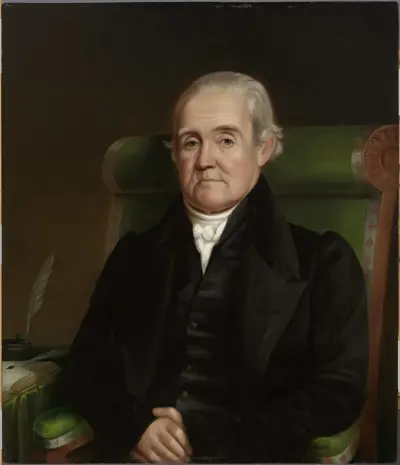
Noah Webster Jr. was an American lexicographer, textbook pioneer, English-language spelling reformer, political writer, editor, and author. He has been called the "Father of American Scholarship and Education". His "Blue-backed Speller" books taught five generations of American children how to spell and read. Webster's name has become synonymous with "dictionary" in the United States, especially the modern Merriam-Webster dictionary that was first published in 1828 as An American Dictionary of the English Language.
