John Hancock Quotes
people who pay greater respect to a wealthy villain than to an honest, upright man in poverty, almost deserve to be enslaved; they plainly show that wealth, however it may be acquired, is, in their esteem, to be preferred to virtue.
Hancock, John. "An Oration Delivered March 5, 1774." Orations Delivered at the Request of the Inhabitants of the Town of Boston, to Commemorate the Evening of the Fifth of March, 1770, Peter Edes, 1785, p. 41.


Jefferson was not anti-Christian as some accuse him. He was a great admirer of Jesus’ life and philosophy. He did object to the non-ethical aspects of Christianity, miracles, dogma, organized churches. See {611664}. Jefferson even went so far as to write his own version of the Bible—New Testament sometimes called the “Jefferson Bible”—where he translated the material and then extracted the ethical principles leaving out everything else.

In 1877 Wasburn was dropped from the List of Ministers by the Unitarian Church. He had become quite atheistic.


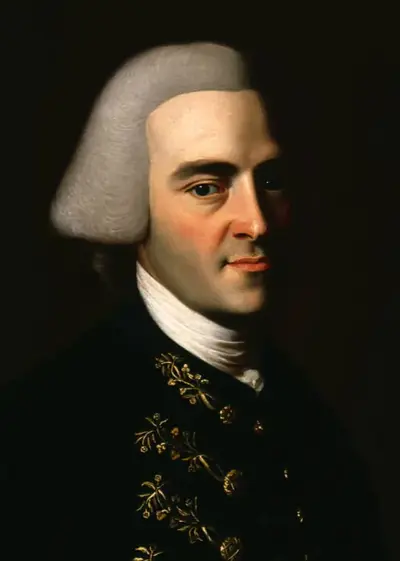
John Hancock was an American merchant, statesman, and prominent Patriot of the American Revolution. He served as president of the Second Continental Congress and was the first and third Governor of the Commonwealth of Massachusetts. He is remembered for his large and stylish signature on the United States Declaration of Independence, so much so that the term "John Hancock" or "Hancock" has become a synonym in the United States for one's signature.
